Portable generator safety matters most in the first hours of an outage, when everyone is in a rush. A generator can keep your fridge cold and your lights on, but used the wrong way, it can hurt or kill. These portable generator safety rules come from the CDC and FEMA Ready.gov.
What is the biggest danger? It is carbon monoxide, or CO. CO is a gas that comes out of the engine. You cannot see it or smell it. It can make people very sick in minutes.
The good news is that it is easy to prevent. Follow the rules below every single time.
Why Carbon Monoxide Is the Big Risk
How does CO hurt people? When you breathe it in, it keeps your body from getting the oxygen it needs.
The CDC lists these warning signs:
- Headache
- Dizziness
- Weakness
- Upset stomach or throwing up
- Chest pain
- Confusion
What should you do if someone feels this way? Get everyone into fresh air right away. Then call 911. Do not go back inside until help says it is safe. People who are asleep or have been drinking can die before they feel any signs.
9 Portable Generator Safety Rules
Here are the rules in plain words. Print this out and tape it to your generator.
1. Never run it indoors
Never run a generator inside your home, garage, basement, crawl space or shed. Ready.gov and the CDC say this is true even with the doors and windows open. Open doors do not clear the gas fast enough.
2. Keep it 20 feet away
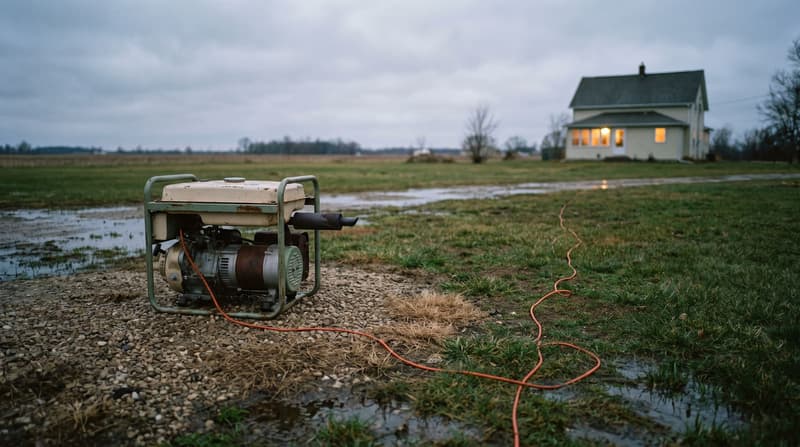
The CDC says to keep your generator at least 20 feet from your home. Keep it away from doors, windows and vents. Point the exhaust away from the house and from your neighbors.
3. Put in CO alarms
Put battery-powered CO alarms, or plug-in alarms with a battery backup, on each floor of your home. Put one near where people sleep. Test them each month, just like smoke alarms.
4. Never plug it into a wall outlet
Plugging a generator into a wall outlet is called “backfeeding.” It sends power back out into the lines. That can shock you, a neighbor or a line worker fixing the power. If you want the generator to run parts of your home, hire a licensed electrician to put in a transfer switch.
5. Use the right cords
Plug things right into the generator. Or use a heavy-duty extension cord made for outdoor use. Check that the cord has no cuts and has all three prongs.
6. Keep it dry
Water and power do not mix. Run the generator on a dry surface. If it is raining, Ready.gov suggests a canopy that is open on all sides. Dry your hands before you touch it.
7. Let it cool before you refuel
Turn it off and let it cool before you add fuel. Gas spilled on a hot engine can catch fire.
8. Store fuel safely
Keep fuel in a container made for fuel. Store it outside your living space, away from anything that makes a flame or spark, like a water heater.
9. Watch the kids and pets
A running generator is hot and loud. Keep kids and pets away from it at all times.
How Big of a Generator Do You Need?
How do you know what it can run? Each appliance has a label that lists its watts. Add up the watts for the things you want to run at the same time.
Here are some rough numbers to start. Check your own labels, since every model is different.
| Item | Rough running watts |
|---|---|
| Fridge | 700 to 800 |
| Chest freezer | 500 to 700 |
| LED light bulb | 10 |
| Phone charger | 10 |
| Box fan | 50 to 100 |
| Sump pump | 800 to 1,000 |
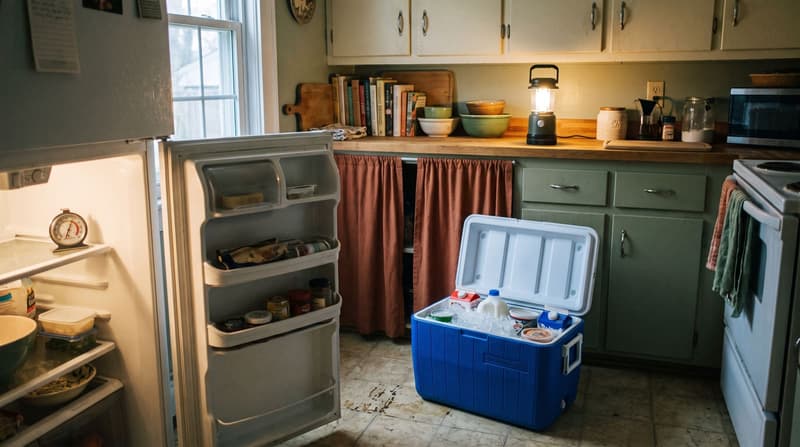
No generator? A closed fridge still keeps food safe for about 4 hours. Our power outage food safety guide explains what to keep and toss.
Some items, like fridges and pumps, need extra power for a few seconds when they start. That is why many people buy a little more generator than they think they need. For anything wired into your home, talk to a licensed electrician first.
Portable Generator Safety Checklist
Before each use, run through this quick list:
- Generator is outside and at least 20 feet from the house
- Exhaust points away from doors, windows and vents
- CO alarms are working inside
- Cords are outdoor rated and not damaged
- Nothing is plugged into a wall outlet
- Generator is dry, and so are your hands
- Fuel is stored away from the house
When the Power Comes Back
Is the job done once the lights come on? Almost. Take a few minutes to wrap up safely:
- Turn off and unplug everything from the generator first.
- Shut the generator off and let it cool all the way down.
- Store it in a dry spot, with no fuel leaks.
- Refill your fuel can so you are ready next time.
- Test your CO alarms again.
Plan Your Outage Beyond the Generator
A generator is only one part of getting through an outage. What else should you have? Start with the basics on our 72-hour home emergency checklist, like flashlights, a radio and first aid.
What about food? Keep food you can eat without cooking, in case the generator fails. Our guide to build a 2-week emergency pantry on a budget has an easy list.
Water matters too, since some homes lose water when the power goes out. See how much water to store for an emergency, and learn how to purify water with bleach if you run low.
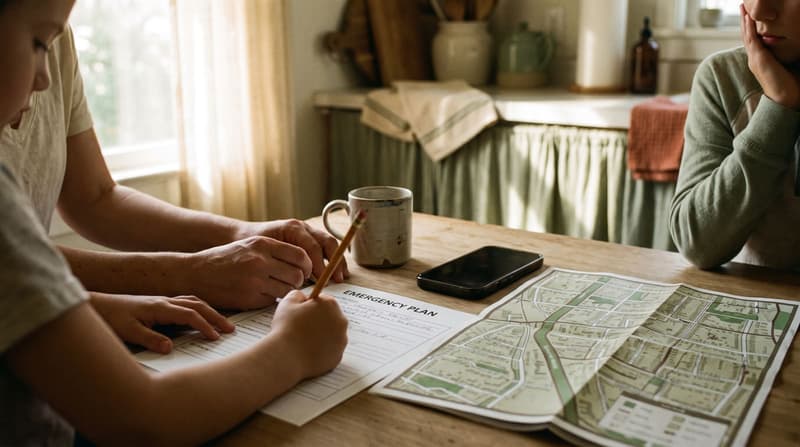
Everyone at home should know the drill, not just the person running the generator. Our family emergency plan guide covers meeting spots and one out-of-town contact.
Your Next Step
Before the next storm, check that you have a working CO alarm on each floor. If you do not, buy one this week. Then pick a spot at least 20 feet from your house where the generator will go, and mark it.