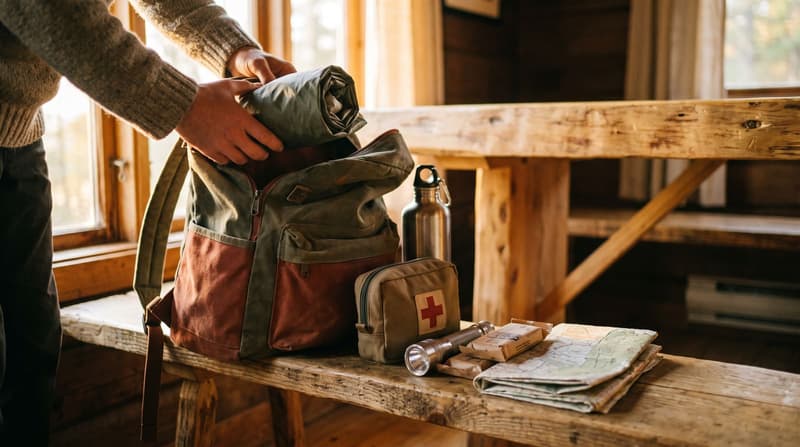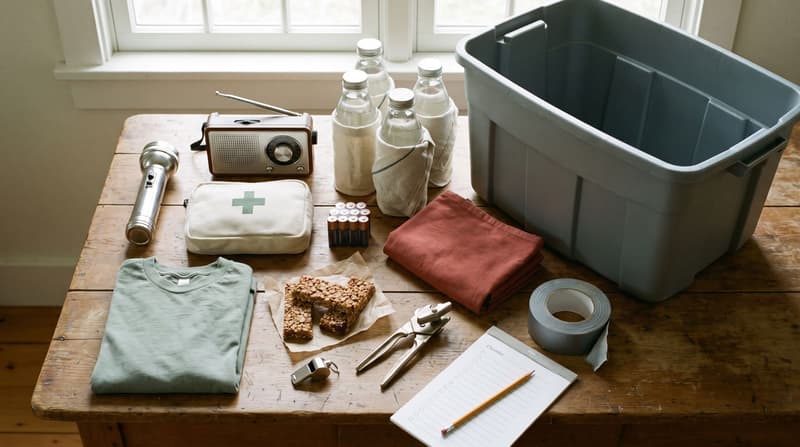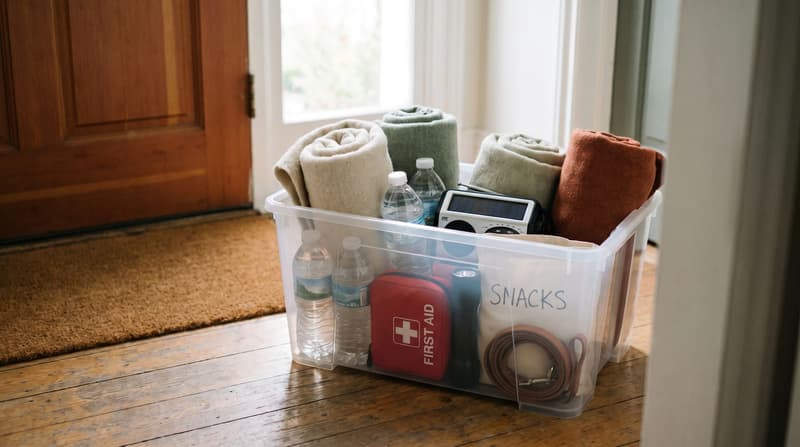
What emergency kit should you have? For most homes, the answer is not one kit but four: a home kit, a go bag, a car kit and a small work kit.
That sounds like a lot. It is not. The four kits share the same short list of basics from FEMA Ready.gov. They just hold different amounts and live in different places.
So let’s sort out which kit does what, and which one to build first.
What Emergency Kit Should You Have First?
Where should you start? Start with the home kit. Most emergencies, like storms and power outages, keep you at home, not on the road.
Ready.gov says you may need to get by on your own for several days after a disaster. A home kit covers those days. Once it is done, the smaller kits are easy, because you already know what goes in them.
Here is how the four kits compare.
| Kit | Where it lives | Main job | Rough size |
|---|---|---|---|
| Home kit | Hall or bedroom closet | Ride out several days at home | One or two large totes |
| Go bag | By the exit door | Leave fast on foot | One backpack per person |
| Car kit | Trunk | Get home or wait out a breakdown | One small duffel |
| Work kit | Desk or locker | Shelter at work for a day | One grab and go case |
Sizes are rough estimates. A family of five needs more room than a single person.
The 10 Basics Every Kit Shares
What are 10 items you need for an emergency kit? These come straight from the Ready.gov basic disaster supplies kit:
- Water, one gallon per person per day
- Food that does not spoil
- Battery or hand crank radio, ideally a NOAA Weather Radio
- Flashlight
- Extra batteries
- First aid kit
- Whistle to call for help
- Manual can opener
- Phone charger and a backup battery
- Local paper maps
Ready.gov also lists a dust mask, plastic sheeting, duct tape, wet wipes, garbage bags and a wrench or pliers to turn off utilities. Those belong mostly in the home kit.
And what are the 5 most important survival items? If you can only grab five, take water, food, a light, a radio and first aid with your medicine. Everything else helps. Those five are the ones you cannot skip.
Kit 1: The Home Kit
This is the big one. It holds enough water and food for several days for everyone who lives with you, pets included.
Water is the bulky part. One gallon per person per day adds up fast. Our guide on how much water to store for an emergency has a table by household size.
Want the full item by item list? Our 72-hour home emergency checklist walks room by room.
What about a 14-day kit?
Is three days enough? It is a good first goal. Many families then grow the home kit toward two weeks, mostly by adding food and water. Our guide to build a 2-week emergency pantry on a budget shows how to get there a few dollars at a time.
Ready.gov’s earthquake page puts it well: if you can afford it, buy the essentials and slowly build up supplies. You do not have to do it in one trip.
Kit 2: The Go Bag
Your home kit stays put. Your go bag leaves with you.
It is one backpack per person, packed with the basics in small amounts plus copies of your papers, cash and medicine. You may carry it a long way, so it has to stay light.
Our go bag checklist covers what goes in each bag, from babies to grandparents.
Kit 3: The Car Kit
What goes in a car emergency kit? Ready.gov’s winter weather page lists jumper cables, sand, a flashlight, warm clothes, blankets, bottled water and snacks that do not spoil.
Add a small first aid kit, a phone charger that plugs into the car, and shoes you can walk in. Ready.gov also says to keep a full tank of gas in winter.
Check the car kit each fall. Swap summer water for fresh bottles and put the warm layers back in.
Kit 4: The Work Kit
Why a kit at work? A storm can hit while you are at your desk, and roads can close before you get home.
Ready.gov says to be ready to shelter at work for at least 24 hours. Your work kit should hold food, water, any medicine you take, and comfortable walking shoes, all in a grab and go case.
A desk drawer or a locker works fine. Keep it small.
Extra Kits for Special Cases
Some homes need one more kit, or a few extra items. Which ones apply to you?
An earthquake kit
Live where the ground shakes? Ready.gov says your kit should include food and water for several days, a flashlight, a fire extinguisher and a whistle. It also says to store heavy and breakable things on low shelves, so they do not fall on you or your supplies.
A school kit for kids
A school kit is a small pouch in a backpack. Put in a snack, a water bottle, any medicine the school allows, and a card with your phone numbers and meeting spots. Check the school’s rules first. Most schools have their own emergency plan.
A pet kit
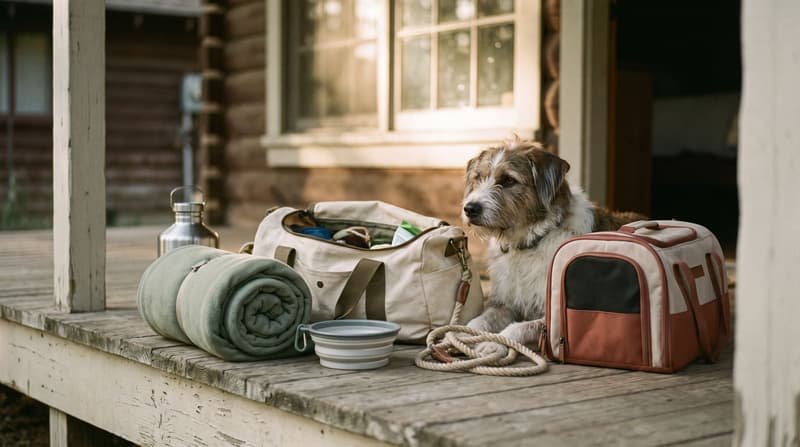
Pets need food, water, a leash, a carrier and copies of vaccine records. Our emergency plan for pets has the full list.
What About a “Bigger” Disaster Kit?
People sometimes ask what to stockpile for a war or a long crisis. The calm answer is that the kit does not change. Ready.gov’s advice is the same for every large emergency: water, food, medicine, a radio for news, and a plan your family has practiced.
Building toward two weeks of water and food at home is a solid, sensible goal. You do not need special gear to get there.
Keep Every Kit Fresh
How often should you check your kits? Twice a year is a good habit. Ready.gov says to replace expired items and to rethink your needs every year as your family changes.
- Eat and replace food near its date
- Swap water you bottled yourself
- Test flashlights and the radio
- Charge the backup battery
- Check medicine dates
- Update phone numbers and papers
Ready.gov also says to keep canned food in a cool, dry place and boxed food in sealed containers. A closet beats a hot garage.
A kit works best with a plan behind it. Our guide to a family emergency plan covers meeting spots and who to call.
Your Next Step
So, what emergency kit should you have? Start with one. This week, grab a tote and fill it with the 10 basics above from things you already own. Write down what is missing and buy one item each payday until the home kit is done.