A family emergency plan is a written answer to three questions. Where will we meet? Who will we call? What does each person do first?
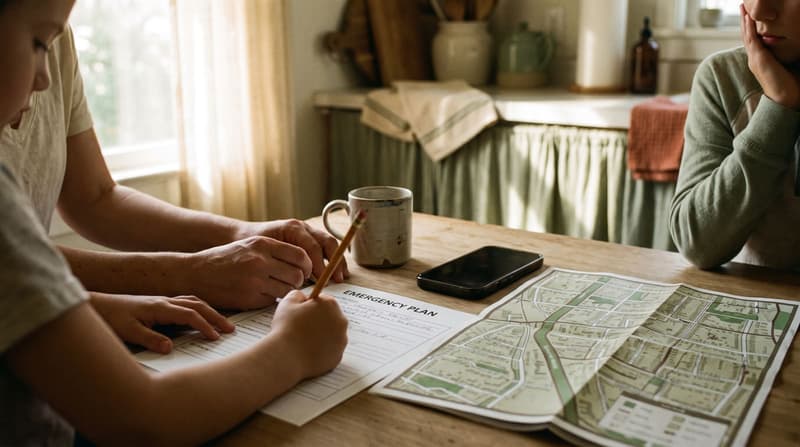
You can write one in about 30 minutes at the kitchen table. FEMA Ready.gov has a free Make a Plan form you can fill in and print.
Why bother? Because in a storm or a fire, nobody thinks clearly. A plan means you do not have to. You just follow the steps you already agreed on.
What Should Be in a Family Emergency Plan?
A good home plan covers four things: how you get alerts, where you shelter, how you would leave, and how you reach each other. Write it down, give a copy to every person in the house, and practice it twice a year.
Ready.gov asks every household to talk through five questions first:
- How will I get emergency alerts and warnings?
- What is my shelter plan?
- What is my evacuation route?
- What is my family communication plan?
- Do I need to update my emergency kit?
Answer those five and you have a plan. Here is how to fill in each one.
Pick Two Meeting Places
Where do you go when you cannot stay put? Pick your spots now, while it is calm. The Ready.gov form has a blank for meeting places, so this is the first one to fill.
One spot near home
Choose a spot right outside, like the big tree or the mailbox across the street. This is for a fire or a gas smell. Everyone walks out and gathers there. Nobody goes back inside.
One spot out of the neighborhood
Now pick a second spot farther away. A library, a school or a friend’s house all work. This is where you go when you cannot get home at all.
Write both addresses on paper. Do not keep them only in your phone. Phones die.
Choose One Out-of-Town Contact
Who does everyone check in with? Pick one person who lives far away. A cousin two states over is perfect. One contact outside the trouble gives the whole house a single place to report in.
That person keeps track of who is safe. It saves you from calling six people while your battery drains.
Should you call or text? Text. FEMA says to use text messages instead of phone calls, because phone systems are often overloaded or damaged after a disaster. A short text is more likely to get through. Save calls for real emergencies so first responders can use the network.
How Will You Get Alerts?
How will you know something is coming? Ready.gov points to three systems:
- Wireless Emergency Alerts. Short alerts sent to phones in a target area. They look like texts but come with a loud tone. You do not sign up, and you are not charged.
- The Emergency Alert System. Warnings sent out over TV, radio, cable and satellite.
- NOAA Weather Radio. A network of stations that carries weather warnings all day and night.
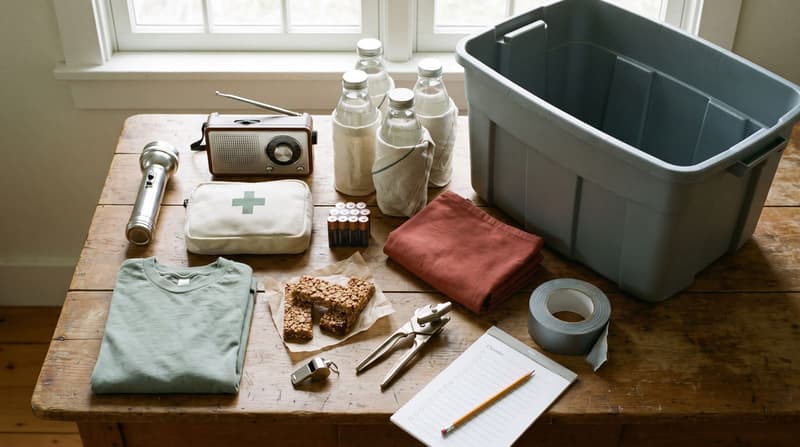
Check your phone settings and make sure alerts are turned on. Then add a battery or hand-crank radio to your 72-hour home emergency checklist. When the power is out, a radio still talks.
Plan How You Would Leave
What if you have to go? Ready.gov says to pick several places you could go, like a friend’s home in another town or a motel. Pick spots in different directions, so one blocked road does not trap you.
More from the same Ready.gov page:
- Learn more than one route out of your area
- Keep at least a half tank of gas in the car at all times
- Fill the tank all the way when bad weather is coming
- Leave early, before the roads get bad
- Follow the posted routes, because shortcuts may be blocked
- Take your pets with you
Here is the part people miss. Ready.gov notes that most public shelters take only service animals. So find a pet-friendly motel or a friend who will take your dog now, not on the night you leave.
Pack a go-bag and make sure everyone knows where it sits. And take your emergency kit with you.
Fit the Plan to Your Household
Is a plan the same for every family? No. Ready.gov says to shape yours around the people in it. Talk through:
- The ages of everyone at home
- Anyone you help care for
- Places you go often, like work and school
- Food needs and allergies
- Medicine and medical equipment
- Disabilities and access needs
- Languages spoken at home
- Pets or service animals
- Who picks up the kids from school
Write the answers down. If someone needs power for medical gear, ask their doctor and your power company about a plan now, not later.
Your supplies are part of this too. Check how much water to store for an emergency so you know your target. Then use our guide to build a 2-week emergency pantry on a budget and stock food a few dollars at a time.
Write It Down and Hand Out Cards
A plan in your head is not a plan. Print your family emergency plan and put a copy in every backpack, wallet and glove box. Tape one inside a kitchen cupboard.
What goes on the card? Keep it short:
- Both meeting places, with addresses
- The out-of-town contact, with a phone number
- Each person’s cell number
- Work, school and daycare numbers
- Doctor and pharmacy numbers
- Insurance policy numbers
- Where the kit and the go-bag live
Kids should carry a card too. A young child may not know a phone number by heart.
Practice Your Family Emergency Plan Twice a Year
Does practice really matter? Yes. The first run always shows a hole. Someone cannot find the flashlight. The side gate is locked. The cat hides.
Pick two dates you will remember, like the days the clocks change. Then run a 15-minute drill:
- Walk to the meeting spot near home
- Send a test text to the out-of-town contact
- Have each person find the go-bag and the kit
- Check flashlight and radio batteries
- Update any number that changed
- Print fresh cards
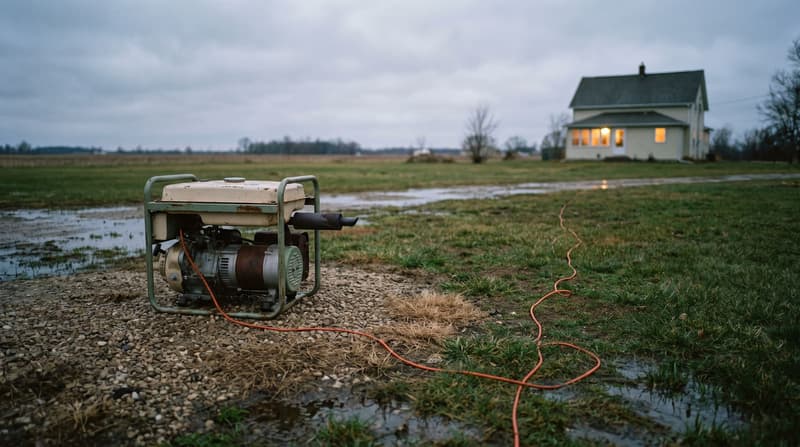
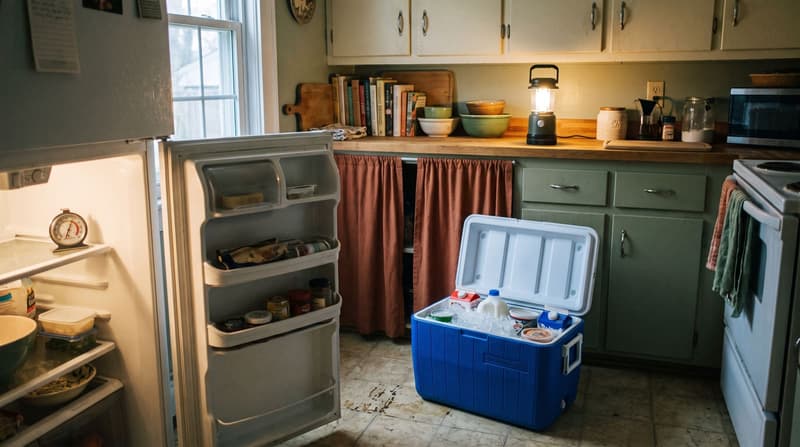
Use the same day to check your food and power items. Our guide to power outage food safety covers the fridge rules. The portable generator safety rules cover backup power before you need it.
Your Next Step
Tonight, take 20 minutes and fill in three blanks: the meeting spot near home, the spot out of the neighborhood, and the name and number of your out-of-town contact. Write them on an index card, make a copy for each person, and put one in every bag in the morning.