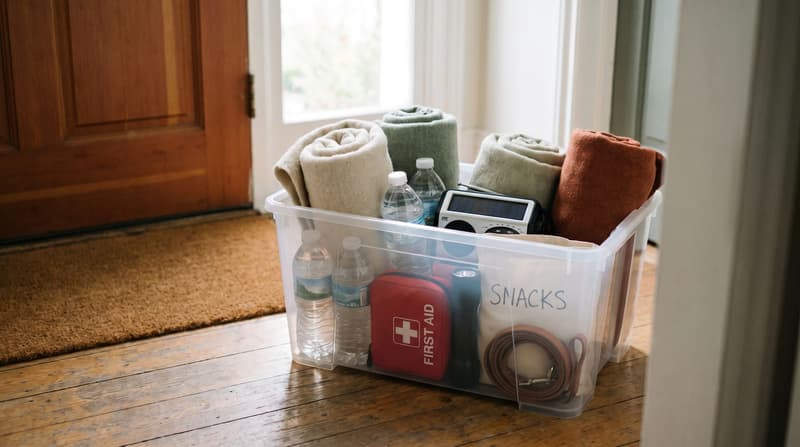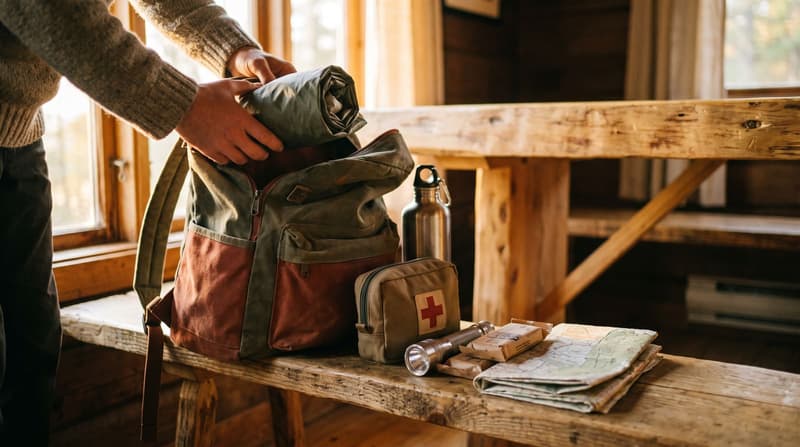
An emergency plan for pets is a short list of what you pack, where your pet goes, and who helps. If you can carry your family out the door in five minutes, your dog or cat should be able to go with you.
Why does this matter so much? Many people stay behind in a storm or fire because they will not leave a pet. A plan made on a calm day means you never have to choose.
The good news is that most of it takes one afternoon. Let’s build it.
What Goes in an Emergency Plan for Pets?
What does a good plan cover? Four things:
- A pet kit packed and ready to grab.
- ID your pet wears every day, plus a microchip.
- A place to stay if you have to leave home.
- A buddy who can get your pet if you are stuck at work.
FEMA Ready.gov lists these same parts on its Prepare Your Pets for Disasters page. Add your pet to your family emergency plan so it all lives on the same sheet of paper.
The Pet Emergency Kit Checklist
How much should you pack? The CDC says to pack a 2-week supply of food, water and any medicine for each animal. Ready.gov says “several days” at minimum. Aim for the CDC number at home and a few days in the bag you carry.
Ready.gov also suggests two kits. One larger kit stays home in case you shelter in place. One light kit goes with you if you have to leave.
Food, water and medicine
- 2 weeks of food, sealed in a waterproof container
- 2 weeks of water for each pet
- Food and water bowls (a collapsible bowl packs flat)
- 2 weeks of any daily medicine, in a waterproof bag
- A 1-month supply of flea, tick and heartworm medicine
- A pet first aid kit
How much water is that? It depends on the size of your pet, so ask your vet for a daily amount. Then store it next to the people water. Our guide to how much water to store for an emergency shows how to set up the human side.
Gear and comfort
- Collar with an ID tag, plus a harness or leash
- A backup leash, collar and tag
- A crate or sturdy carrier, ideally one per pet
- Bedding, a favorite toy and some treats
- Paper towels, trash bags and cleaning supplies for accidents
Papers and photos
- Copies of vet records, including the rabies and vaccine records
- Your pet’s microchip number
- Recent photos of each pet
- A photo of you with your pet, to prove ownership
- A short written description: breed, sex, color and weight
Keep the papers in a zip bag and a copy on your phone. Ready.gov says to have them both on paper and available electronically.
Pet Emergency Kit for Dogs vs. Cats
Do dogs and cats need different kits? The basics are the same. A few items change.
| Item | Dogs | Cats |
|---|---|---|
| Waste | Poop bags | Small litter box and litter |
| Getting around | Leash and harness | Carrier they can stay in for hours |
| Vet test to copy | Latest heartworm test | Latest FeLV/FIV test |
| Comfort | Chew toy, blanket | Towel to cover the carrier |
Cats hide when they are scared. So practice getting yours into the carrier now, and keep the carrier out where the cat sees it every day. A cat that trusts the carrier is a cat you can load in one minute.
For a cheap travel litter box, use a disposable foil pan and a small bag of litter. It holds up fine for a few days.
Where Will Your Pet Stay If You Leave?
This is the step most people skip. Can you just bring your pet to a shelter? Not always. Ready.gov says only service animals may be allowed in public shelters. Some places open pet-friendly shelters, but you cannot count on it.
So make a short list today:
- A friend or family member outside your area who would take your pet
- Two or three pet-friendly motels in different directions
- Boarding kennels and your vet’s office
- Your local animal shelter or emergency management office, which may know local pet plans
Write the phone numbers on the same card as your family contacts. Ready.gov says to know a safe place for your pets before disasters, not during one. When a storm is coming, every pet-friendly room fills up fast.
Set Up a Pet Buddy
What if something happens while you are at work? This is where a buddy comes in. Ready.gov suggests planning with neighbors, friends or relatives so that someone is ready to care for or evacuate your pets.
Pick one person close by. Then give them:
- A spare house key
- Where the pet kit and carrier live
- Your pet’s name, habits and hiding spots
- Your vet’s number and your out-of-town contact
Offer to do the same for them. Two neighbors with a deal are far stronger than one alone.
In case of emergency pet signs and stickers
Should you put a pet sticker on your door? Many people use an “in case of emergency” pet sticker to tell rescuers how many animals are inside. If you use one, keep it current. If you leave with your pets, write “evacuated” on it so no one goes back in to search.
ID and Microchip: Your Pet’s Way Home
What if your pet gets loose? Scared animals bolt, and fences blow down. ID is how they come back to you.
Ready.gov says to have your pet microchipped and to keep your address and phone number up to date. A chip only helps if the phone number on file still rings. Call the chip company once a year and check.
Your pet should also wear a collar with a tag every day, not just in a storm. Put your cell number and an out-of-town number on the tag.
Fold Pets Into Your Home and Go Bag Plans
Does your pet need a separate plan? No. The best emergency plan for pets fits inside the plan you already have.
- Put a few days of pet food and a bowl in your go bag checklist, so it leaves with you.
- Add the 2-week pet supply to your 72-hour home emergency checklist tote.
- Rotate pet food the same way you rotate your pantry. Our guide to build a 2-week emergency pantry on a budget walks through how.
When you practice your fire drill, bring the pets. How long does it take to find the cat and get her in the carrier? Time it. That number is often the surprise of the whole drill.
Ask your vet for help too. The CDC suggests it, and your vet knows your pet’s medicine and health needs better than any checklist.
Your Next Step
Tonight, take a clear photo of each pet, and one of you holding your pet. Save them to your phone and print one copy for the kit. Then text a neighbor and ask if they will be your pet buddy. Those two steps take 15 minutes and start your emergency plan for pets.