A go bag checklist puts one packed bag by your door, ready to carry out in seconds. FEMA Ready.gov calls it a go-bag, and says to prepare one you can carry when you evacuate on foot or on public transportation.
Why does this matter? A fire, a gas smell or a fast-rising creek can give you five minutes. Five minutes is not enough time to think. It is plenty of time to grab a bag that is already packed.
So let’s pack one for every person in your home.
Go Bag or Home Kit? They Are Not the Same
What is the difference? Your home kit stays put. Your go bag leaves with you.
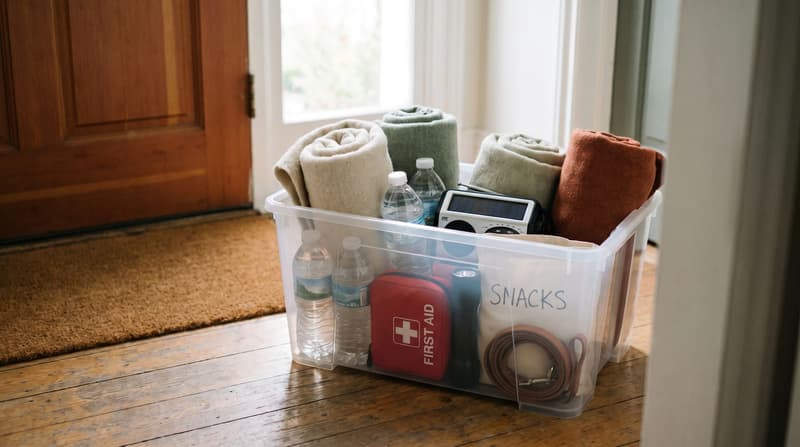
The home kit is the tote in the hall closet. It holds days of water, food and supplies for riding things out at home. Our 72-hour home emergency checklist covers that one item by item.
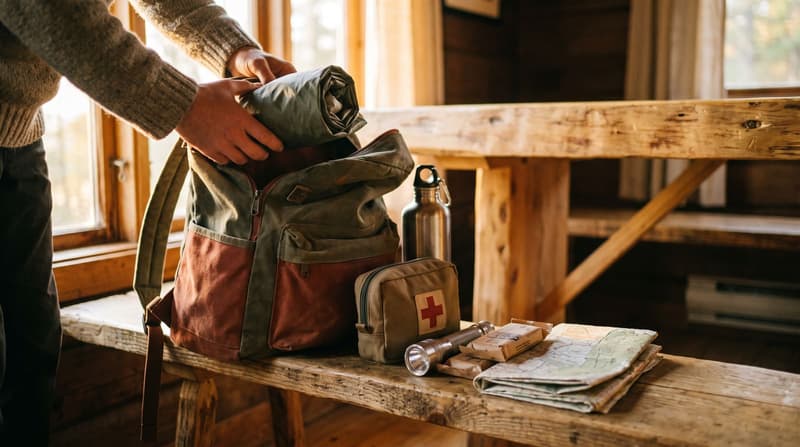
The go bag is smaller. It is a backpack, and you may carry it a long way on your own shoulders. So it holds less, and what it holds are the things you cannot buy again.
Most homes want both. If you can only do one this month, build the home kit first. Then pack the bags.
The Go Bag Checklist: What to Pack First
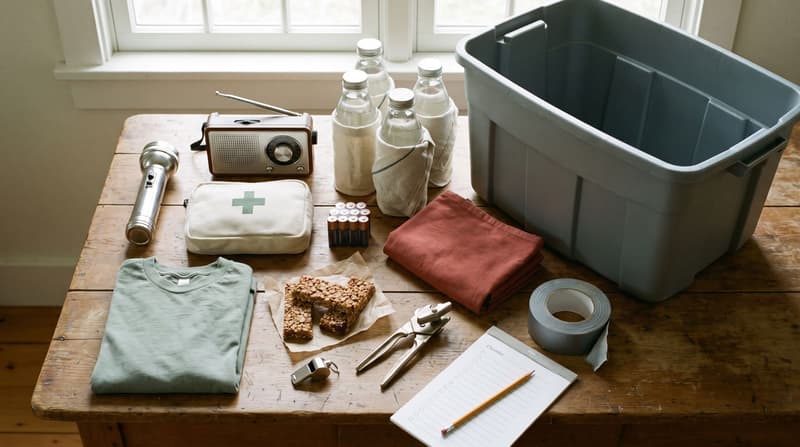
What are the 10 items in an emergency go bag? Start right here. These come from the Ready.gov basic disaster supplies list, trimmed down to what one person can carry.
- Water: two or three bottles per person
- Food that needs no cooking, like bars, nuts, dried fruit or peanut butter
- Flashlight and extra batteries
- Small battery or hand crank radio, ideally a NOAA Weather Radio
- First aid kit
- Your medicine, with a written list of what you take
- Phone charger and a charged battery pack
- Copies of your ID, insurance and bank papers in a zip bag
- Cash in small bills
- Whistle to call for help
Ten items. One bag.
The next 10 items
What are 20 items in an emergency kit? Add this second set and you are there:
- A full change of clothes and shoes you can walk miles in
- Rain jacket or a cheap poncho
- Emergency blanket or a light sleeping bag
- Soap, hand sanitizer and wipes
- Toothbrush and toothpaste
- Garbage bags and plastic ties
- Manual can opener, if you packed cans
- Local paper map
- Spare house and car keys
- A written list of phone numbers
Why paper for the map and the numbers? Ready.gov puts local maps in the basic kit for a reason. Phones die and cell service drops. Paper keeps working.
Keep the water light
Water is the heavy one. A gallon weighs roughly eight pounds, which is a rough number, but it is close enough to plan around. That is why a go bag does not try to hold a gallon a day per person.
Pack a few bottles and plan to refill along the way. Keep the real supply at home. Our guide on how much water to store for an emergency walks through the one gallon per person per day rule from Ready.gov.
If you ever have to fill from a tap you do not trust, our guide to purify water with bleach walks through the official steps.
A Go Bag Checklist for Each Person at Home
Does everyone need the same bag? No. Ready.gov says to build your plan around the people in your household, including their ages, their medical needs and your pets. The bags follow the same idea. Here is what changes.
Babies and toddlers
- Formula, bottles and a few days of baby food
- Diapers, wipes and a changing pad
- Two extra outfits and a warm layer
- A carrier or sling, so your hands stay free
- One comfort toy or blanket
Put the baby supplies in an adult’s bag. A toddler cannot carry anything, and you do not want to be counting bags in the dark.
Kids and students
Give each kid their own small backpack. Let them pack a snack and a small toy in it, so the bag feels like theirs and they remember it exists.
Then add the part that matters: a card with your phone numbers, your out-of-town contact and both meeting spots. A young child may not know a single number by heart. Older students should keep the same card in a school bag.
If you are pregnant
Pack copies of your prenatal records, your provider’s number and the hospital address. Add extra water and easy snacks, plus a small pillow if there is room.
Ask your doctor or midwife what else belongs in your bag and how far along is too far to travel. That call is theirs to make, not ours.
Older adults and anyone with medical needs
- A written list of every medicine, the dose and the pharmacy
- Spare glasses and hearing aid batteries
- A cane, walker parts or anything a mobility aid needs
- Doctor, pharmacy and insurance numbers on paper
- A cooler pouch if any medicine needs to stay cold
Ask the pharmacy how to keep a few extra days of medicine on hand. If anyone uses power for medical gear, call the power company now and ask about their medical needs list.
Pets
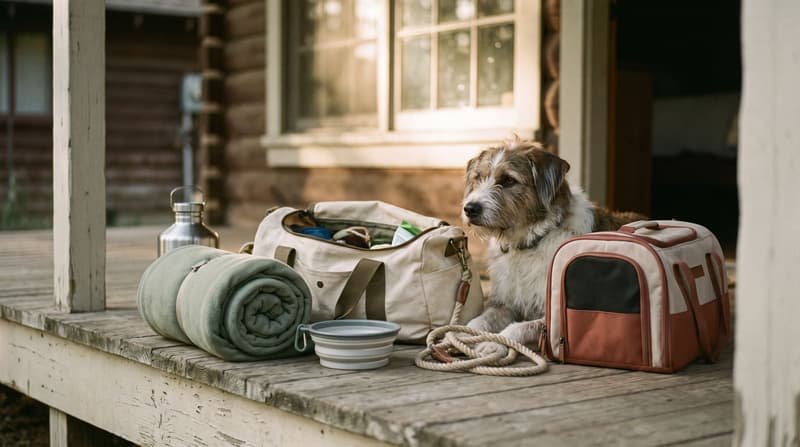
Ready.gov says to take your pets with you, but to understand that only service animals may be allowed in public shelters. So find a pet-friendly motel or a friend outside the area today, not on the night you leave.
Pack a few days of pet food, a collapsible bowl, a leash, a carrier and copies of vaccine records. Our emergency plan for pets has the full pet kit list.
Where Should Each Bag Live?
One bag by the door is good. Three bags in three places is better, because you may be at work or on the road when it happens.
| Where it lives | What to use | What goes in it |
|---|---|---|
| By the exit door | One backpack per person | The full list above |
| In the car | Small duffel | Water, snacks, blanket, walking shoes, first aid |
| At work | Grab and go case | Food, water, medicine, comfortable walking shoes |
That work list is straight from Ready.gov, which says your work kit should hold food, water and other things you need such as medicine, plus comfortable walking shoes, kept in a grab and go case.
One more from the same page: Ready.gov says to keep a half tank of gas in your car at all times, and to fill the tank when an evacuation looks likely. A packed bag does not help much if the car is empty. Car and work kits are covered in what emergency kit you should have.
How to Pack a Go Bag Cheaply
Do you have to buy all of this? No. Most of it is already in your house. Try this order:
- Find a bag. An old school backpack or gym bag is fine. It does not need to look tactical.
- Shop your own drawers. Flashlights, chargers, travel soap and a spare toothbrush are usually free.
- Copy your papers. A photo of each document on your phone plus a paper copy in a zip bag costs nothing.
- Add one item a week. A radio one week, a battery pack the next.
Buy the first aid kit last if money is tight, because most homes already own bandages, tape and pain relievers that can go in a pouch today.
Food is the same story. The snacks in your go bag can come out of the same shopping habit that builds your pantry. Our guide to build a 2-week emergency pantry on a budget shows how to do it a few dollars at a time.
Check the Bags Twice a Year
How often should you open them? Twice a year is enough. Pick two dates you already remember, like the days the clocks change.
- Eat and replace any food near its date
- Swap water you bottled yourself
- Test the flashlight and the radio
- Charge the battery pack
- Check medicine dates
- Try the kids’ clothes on, because kids grow
- Reprint your contact cards if a number changed
Use the same day to walk through your family emergency plan, so the bags and the plan match. Then show every person in the house where their own bag sits.
Your Next Step
Tonight, set one empty backpack by the door you would actually run out of. Put five things in it: a flashlight, a phone charger, a water bottle, a snack and a zip bag with copies of your ID. That takes ten minutes, and your go bag checklist is already half done.