If your water might be unsafe, you can purify water with bleach from your laundry room. It takes a few drops, a spoon and 30 minutes. This guide shows how to purify water with bleach using the steps from the CDC and the EPA.
When would you need this? Maybe a storm broke a water line. Maybe your town put out a boil-water notice. Or maybe you are using water you stored a long time ago. In each case, clean water keeps your family safe.
What You Need
Do you need special gear? No. You need just a few things:
- Regular, unscented liquid bleach
- A clean dropper, or a clean spoon if you have no dropper
- A clean container with a lid
- A clean cloth, paper towel or coffee filter
- The water you want to treat
Pick the right bleach
Does any bleach work? No. This part matters. The CDC says to use plain, unscented bleach. The label should say it is for disinfecting, or list 6% or 8.25% sodium hypochlorite. That is the part of bleach that kills germs.
Do not use bleach that is:
- Scented, like lemon or lavender
- Color-safe
- Mixed with other cleaners
- Very old (bleach gets weaker over time, so check the date)
Step by Step: How to Purify Water With Bleach
Ready? Follow these steps in order.
1. Clear the water first
Is the water cloudy? If so, let it settle. Then pour the clear water off the top. You can also pour it through a clean cloth, paper towel or coffee filter. Bleach works best on clear water.
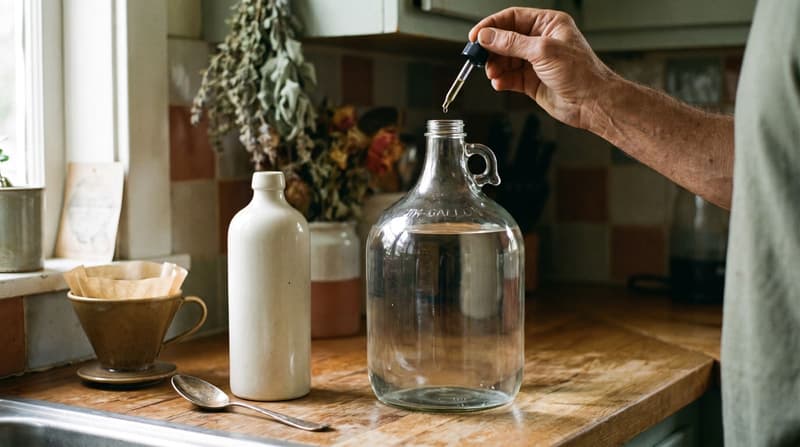
2. Add the right number of drops
How much bleach do you add? Check the percent on the label. Then use this table from the CDC and EPA.
| Water | 6% bleach | 8.25% bleach |
|---|---|---|
| 1 quart | 2 drops | 2 drops |
| 1 gallon | 8 drops | 6 drops |
| 2 gallons | 16 drops | 12 drops |
| 4 gallons | 1/3 teaspoon | 1/4 teaspoon |
If the water is still cloudy after you filter it, or if it is very cold, double the drops.
3. Stir and wait 30 minutes
Stir the water well. Then wait 30 minutes. Do not drink it before then.
4. Smell the water
After 30 minutes, the water should have a slight bleach smell. That tells you it worked.
What if it does not smell? The EPA says to add the same number of drops again. Then wait 15 more minutes before you use it.
5. Store it clean
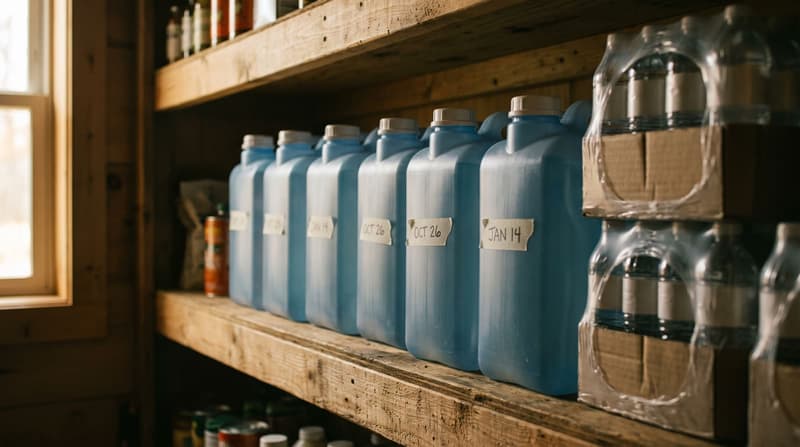
Pour the treated water into a clean container with a tight lid. Keep it in a cool, dark place. Label it with the date.
Common Mistakes to Avoid
Most problems come from small slips. Watch out for these:
- Using more bleach “to be safe.” More is not better. Too much bleach can make you sick. Stick to the table.
- Skipping the wait. Germs need the full 30 minutes of contact time. Set a timer.
- Treating cloudy water without filtering it. Dirt hides germs from the bleach. Let it settle or filter it first.
- Using a dirty jug. Clean water in a dirty container is not clean water anymore. Wash the container with soap and hot water first.
- Guessing the strength. Read the label every time you buy a new bottle. Brands and sizes change.
What if you have no dropper? A clean spoon works in a pinch. The EPA says 1/8 teaspoon of 6% bleach treats about one gallon. A dropper is still more exact, so add one to your kit.
When to Boil Instead
Is bleach the best choice every time? Not quite. The CDC says boiling is the best way to make water safe. Some germs can live through bleach, but not through a good boil.
To boil water, the CDC says:
- Bring it to a full, rolling boil for 1 minute.
- If you live above 6,500 feet, boil it for 3 minutes.
- Let it cool, then store it in a clean container.
So when should you use bleach? Use it when you have no power or fuel to boil. If you can boil safely, boil.
When Not to Use Bleach
Can bleach fix any water? No. Bleach kills germs. It does not remove fuel, poison or chemicals.
If your water may have gas, oil or chemicals in it, do not drink it. Find another source of water. Your local health department can tell you what is safe in your area.
A few more safety tips:
- Never mix bleach with ammonia or other cleaners. It makes a harmful gas.
- Keep bleach up high, away from kids and pets.
- If someone gets sick after drinking water, call a doctor or Poison Control right away.
Keep Water on Hand So You Rarely Need This
Would you rather skip the bleach? The best plan is to store clean water before you need it. Most homes should keep at least one gallon per person per day. Our guide on how much water to store for an emergency has an easy table for your household.
Add a small bottle of fresh, unscented bleach and a dropper to your kit too. They fit right next to the flashlight on our 72-hour home emergency checklist.
And do not forget food. Many pantry meals need water to cook. When you build a 2-week emergency pantry on a budget, plan the water to go with it.
Your Next Step
Go to your laundry room today and read your bleach label. If it is plain, unscented and 6% or 8.25%, write “8 drops per gallon” or “6 drops per gallon” on the cap with a marker. Then put a clean dropper next to it.