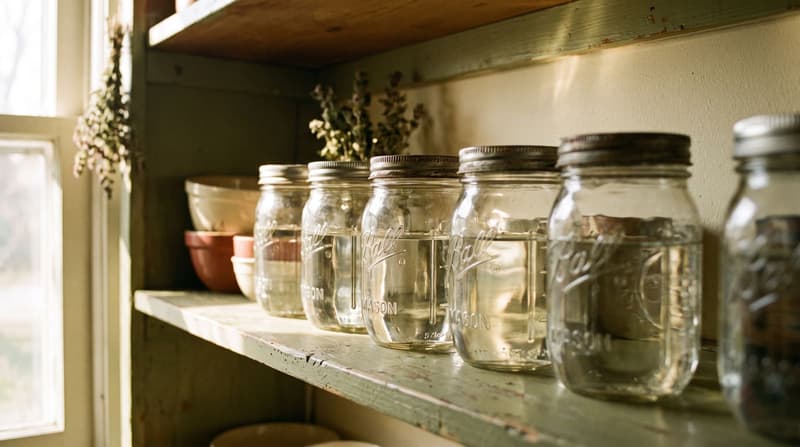
Can you store water in mason jars? Yes, you can, and it is a smart way to use the empty jars sitting in your cupboard. There is one catch, though. Glass can break, so jars work best as a backup to your main water supply, not the whole thing.
This guide shows you how to fill, seal and store jar water the safe way. The steps come from Utah State University (USU) Extension, the CDC and FEMA Ready.gov.
Can You Store Water in Mason Jars Safely?
Is glass a good choice for water? In some ways, yes. Glass does not soak up smells, and it does not let fumes seep in the way some plastic can. A canning jar with a new lid also seals tight.
USU Extension says, “One effective way to store water is in clean canning jars.” So the short answer is a clear yes.
Then why the catch? The CDC has its own advice for an emergency water supply. It says the best choice is a food-grade water storage container. If you use anything else, the CDC says it should close tight and be made of “durable, unbreakable materials (not glass).”
Why does that matter? Think about what an emergency looks like. A strong storm, a shaking floor or a dropped box can crack a jar. A cracked jar means lost water and broken glass on the floor right when you need both hands free.
The best way to use jars
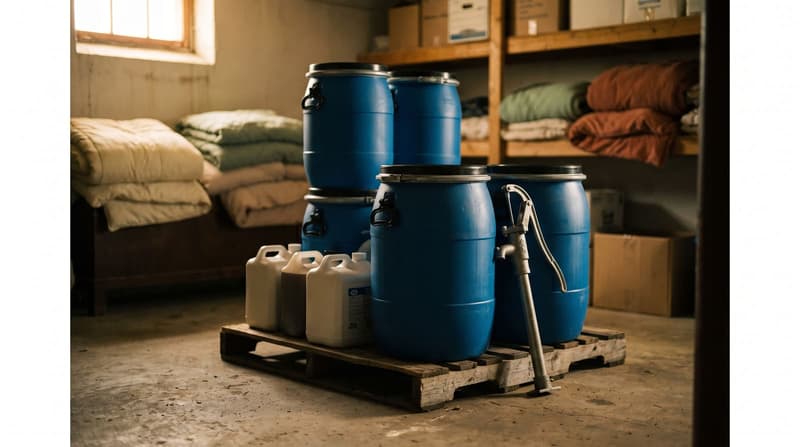
Here is what we do. Keep most of your water in food-grade jugs or sealed store-bought bottles. Then use mason jars for the extra. They are great for:
- A few days of drinking water on a pantry shelf
- Water you want to keep in the fridge
- Filling the gaps in a shelf you already have
- Reusing jars you have not filled with food this year
Not sure how much you need in total? Our guide on how much water to store for an emergency has a simple table by family size.
Two Ways to Fill Mason Jars With Water
You have two choices. You can fill and cap them, or you can can them. Which one is right for you? It depends on how long you want the water to sit.
| Method | Work | How long to keep it | Best for |
|---|---|---|---|
| Fill and cap | 10 minutes | Swap every 6 months (CDC) | Short-term use, fridge water |
| Water bath canning | About 1 hour | Check every 6 to 12 months (USU) | Long-term shelf storage |
Method 1: Fill and cap
This is the quick way. It works much like filling any other bottle.
- Wash the jar and lid with dish soap and rinse well.
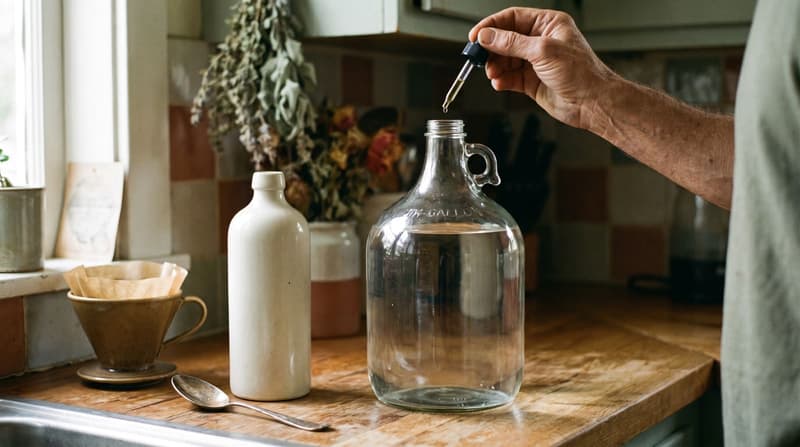
- Sanitize them. The CDC says to mix 1 teaspoon of plain, unscented bleach into 1 quart of water. Pour it in, cap it and shake so it touches every spot inside. Wait at least 30 seconds, then pour it out.
- Let the jar air dry.
- Fill it with clean tap water and screw the lid on tight.
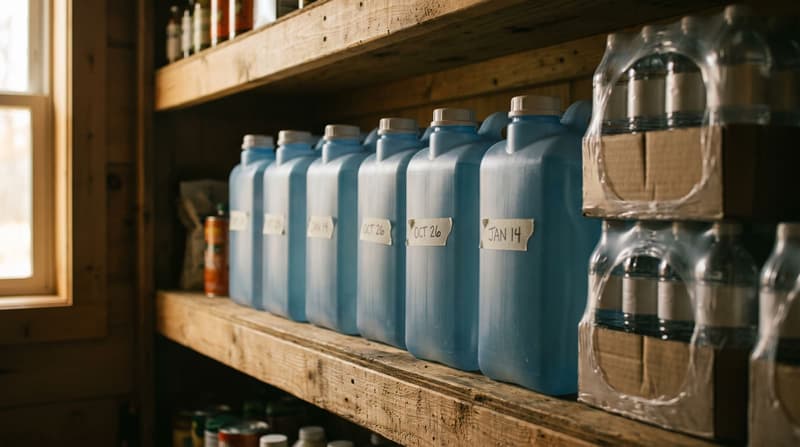
- Label it “drinking water” with the date.
The CDC says to replace water like this every 6 months.
Method 2: Can the water in a water bath
Want jar water that keeps longer? USU Extension shares a simple canning method. Here are its steps:
- Fill clean pint or quart canning jars with water. Leave 1 inch of space at the top.
- Put on two-piece metal canning lids.
- Fill a boiling water canner halfway and heat it to about 140°F.
- Set the jars in the canner. Add boiling water until the jars are covered by 1 inch.
- When the water comes back to a full, rolling boil, process the jars for 20 minutes.
- Lift the jars out and let them cool. Once the lids seal, take off the screw bands and store the jars.
Do you see a white ring in the jar later? USU says that is normal. It is just minerals from the water.
How Long Can You Store Water in Mason Jars?
How long does jar water stay good? USU Extension says water that was safe to drink and was stored the right way “should have an indefinite shelf life.” In plain words, it does not go bad on a set date.
That does not mean you can forget about it. USU says to check stored water every 6 to 12 months. Look for:
- Lids that are loose or no longer sealed
- Cracks or chips in the glass
- Cloudy water or anything floating
- Rust on the lid
If you find a problem, pour the water on your plants and refill the jar. For jars you just filled and capped, stick with the CDC rule and swap them every 6 months.
Is old jar water still safe to drink? If the seal held and the water looks clear, it should be fine. If you are not sure, treat it first. Our guide on how to purify water with bleach walks you through the CDC and EPA drops per gallon.
Where to Keep Your Jars
Where should the jars go? The CDC says to keep stored water in a cool spot, about 50°F to 70°F, and out of direct sun. Keep it away from gas, paint and bug spray too.
A few jar-only tips help a lot:
- Use a low shelf. A jar that falls a foot is less likely to break than one that falls six.
- Add a lip or strap. A small board or bungee cord across the shelf stops jars from sliding off.
- Keep the canning box. The cardboard dividers stop jars from knocking into each other.
- Do not freeze full jars. Water grows when it freezes and can crack the glass. Keep jars out of cold garages and sheds in winter.
Can you store water in mason jars in the fridge? Yes, and it is one of the best uses for them. Cold water in a jar is ready to drink and easy to grab. Our power outage food safety guide explains how long fridge food stays safe when the power goes out.
How Much Water Fits in a Jar?
How many jars would you need? More than you might think. One gallon is 4 quarts, or 8 pints.
FEMA Ready.gov says to store at least one gallon per person per day. So one person needs 4 quart jars a day. A family of four needs 16 quart jars for just one day.
That is why jars work best as extra water. A few cases of quart jars can cover a weekend. For two weeks, you want jugs or cases of bottled water too. Our guide on how to store water long term shows how to set those up.
Also, save a few jars for food. Jars are handy when you build a 2-week emergency pantry on a budget, since they keep rice, oats and beans safe from bugs.
Your Next Step
Pull out 4 empty quart jars today. Wash them, sanitize them with the CDC bleach mix and fill them with tap water. Write “drinking water” and the date on each lid. That is one full day of water for one person. Then add it to your 72-hour home emergency checklist and keep building from there.