Power outage food safety comes down to two numbers and one habit. The numbers are 4 hours for the fridge and 48 hours for a full freezer. The habit is keeping the doors shut. This guide covers power outage food safety using the rules from FoodSafety.gov.
Why does it matter? Germs that make people sick grow fast in food that gets warm. You cannot always see or smell them. A little planning keeps your family safe and saves you money.
The Two Numbers to Remember
How long does food stay cold with no power? FoodSafety.gov gives these rough times, as long as you keep the doors closed:
| Where | About how long it stays safe |
|---|---|
| Fridge, door closed | 4 hours |
| Full freezer, door closed | 48 hours |
| Half-full freezer, door closed | 24 hours |
Each time you open the door, cold air escapes. So what should you do? Open it only when you must. Grab what you need and close it fast.
What Temperature Is Safe?
What counts as “cold enough”? FoodSafety.gov says your fridge should be at 40°F or below. Your freezer should be at 0°F or below.
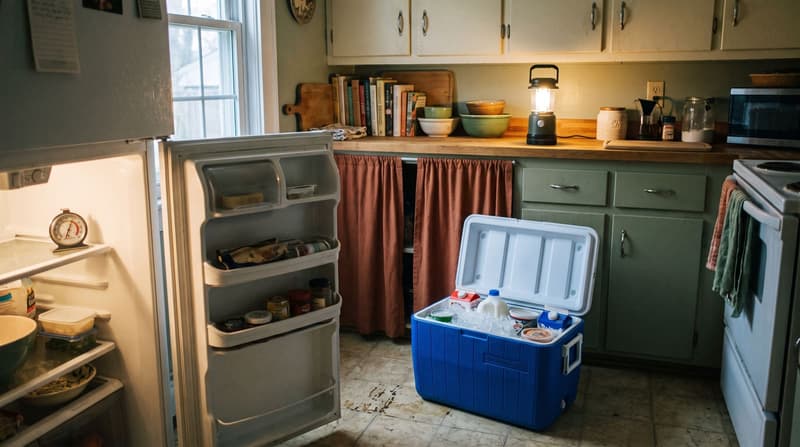
The easy way to know is an appliance thermometer. It is a small, cheap thermometer that sits inside the fridge or freezer. Put one in each. When the power comes back, you can check the number instead of guessing.
What to Toss After a Power Outage
When should food go in the trash? FoodSafety.gov says to throw out perishable food that has been above 40°F for 2 hours or more. “Perishable” means food that spoils fast without cold.
Throw these out if they got too warm:
- Raw or cooked meat, chicken and fish
- Milk, cream and yogurt
- Soft cheese, like cottage cheese or cream cheese
- Eggs and egg dishes
- Leftovers and deli food
- Cooked rice, pasta and potatoes
- Opened baby formula
Can you taste a bite to check? No. Never taste food to see if it is safe. The germs that cause illness often do not change the taste or smell.
The simple rule from FoodSafety.gov is this: when in doubt, throw it out.
What You Can Usually Keep
Does everything have to go? No. Some foods hold up fine for a while without cold. FoodSafety.gov lists foods that are often OK, such as:
- Hard cheese, like cheddar and parmesan
- Butter
- Whole fresh fruit and raw vegetables
- Peanut butter, jelly, mustard and ketchup
- Bread and most baked goods without cream filling
Is the list longer than this? Yes. FoodSafety.gov has a full chart for the fridge and one for the freezer. It is worth printing a copy and taping it inside a cupboard.
What about frozen food?
Can you refreeze food that started to thaw? FoodSafety.gov says you can refreeze it if it still has ice crystals, or if it is 40°F or below. It may lose some flavor or get soft, but it is safe.
If frozen food got warmer than 40°F for 2 hours or more, treat it like fridge food and toss it.
What About Medicine That Needs the Fridge?
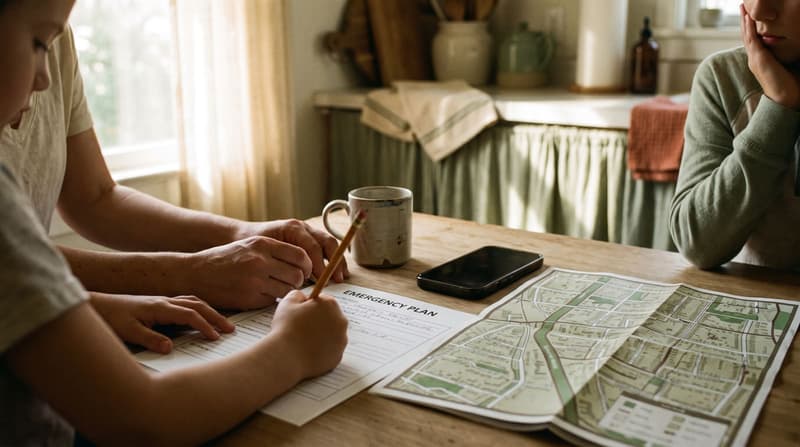
Some medicines, like insulin, need to stay cool. What should you do if the power goes out? Do not guess. Ask your doctor or pharmacist now, before an outage, how long your medicine stays good without the fridge and what to do if it gets warm. Write their answer on a card and keep it with your kit. If a medicine may have spoiled, call your pharmacist before you use it.
Can you stretch those hours? Yes. Try these tips before and during an outage:
- Freeze water ahead of time. Keep a few frozen water jugs in the freezer. They fill empty space and help keep things cold.
- Group food together. In the freezer, packed food stays cold longer than loose food.
- Keep a cooler ready. If the power will be out more than 4 hours, move milk, meat and leftovers to a cooler with ice.
- Buy ice early. Block ice or dry ice can help. Handle dry ice with gloves and keep the room airy.
Running a generator to keep the fridge going? Place it at least 20 feet from the house and never inside. Our portable generator safety rules cover the rest.
Plan Meals That Do Not Need a Fridge
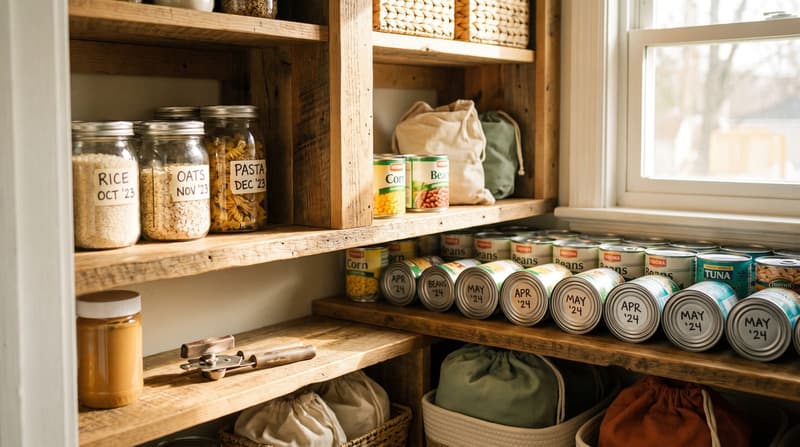
What will you eat once the fridge food is gone? This is where your pantry saves the day. Shelf-stable foods like canned tuna, beans, crackers and peanut butter need no cold at all.
If you do not have a stash yet, start small. Our guide to build a 2-week emergency pantry on a budget shows how to add a few cans each week.
Some garden food needs no fridge either. Potatoes, onions, winter squash and whole tomatoes all keep on a counter for days. That is one more reason to learn how to make a backyard garden.
Water matters too. Many homes lose water pressure in a long outage. Check how much water to store for an emergency so you have enough to drink and clean up.
A Quick Power Outage Food Safety Checklist
Save this list for the next storm:
- Appliance thermometers in the fridge and freezer
- A cooler and a few frozen water jugs
- Doors closed as much as you can
- Note the time the power went out
- Check temps as soon as the power is back
- Toss perishable food above 40°F for 2 hours or more
Add a thermometer and cooler to your 72-hour home emergency checklist so they are ready before you need them.
Your Next Step
Buy two appliance thermometers this week, one for the fridge and one for the freezer. Put them in today and check that the fridge reads 40°F or below and the freezer reads 0°F or below.