No-cook emergency meals are meals you can make with no stove, no microwave and no power. The best no-cook emergency meals use food your family already likes, so a hard week still feels a little normal.
What can you eat without cooking? Most of a normal pantry. Ready.gov says commercially canned food can be eaten right out of the can without warming. Add crackers, peanut butter and fruit, and you have real meals.
This guide gives you a 3-day plan, a shopping list and the safety rules to keep in mind.
What Makes Good No-Cook Emergency Meals?
What should you look for? Ready.gov suggests food that does not need a fridge, cooking, water or special prep. That gives you four simple tests:
- No fridge. It sits on a shelf until you open it.
- No heat. You can eat it cold.
- Little or no water. Save your water for drinking.
- Small portions. Single cans and cups leave no leftovers to spoil.
Then add one more test: would your kids eat it on a normal Tuesday? If not, they will not eat it in a storm either. A stressful week is a bad time to try new food.
A 3-Day No-Cook Meal Plan
How do you turn cans into no-cook emergency meals? Here is a sample plan for one person. Swap in foods your family likes.
| Day | Breakfast | Lunch | Dinner |
|---|---|---|---|
| 1 | Cereal with shelf-stable milk, canned peaches | Tuna on crackers, baby carrots | Peanut butter wraps, applesauce cup |
| 2 | Granola with shelf-stable milk, a banana | Canned chicken salad on crackers | Bean and corn salad, tortilla chips |
| 3 | Peanut butter on bread, raisins | Hummus wrap with canned veggies | Canned chili eaten cold, crackers, fruit cup |
Snacks for any day: protein bars, trail mix, nuts, dried fruit and jerky.
Easy no-cook recipes
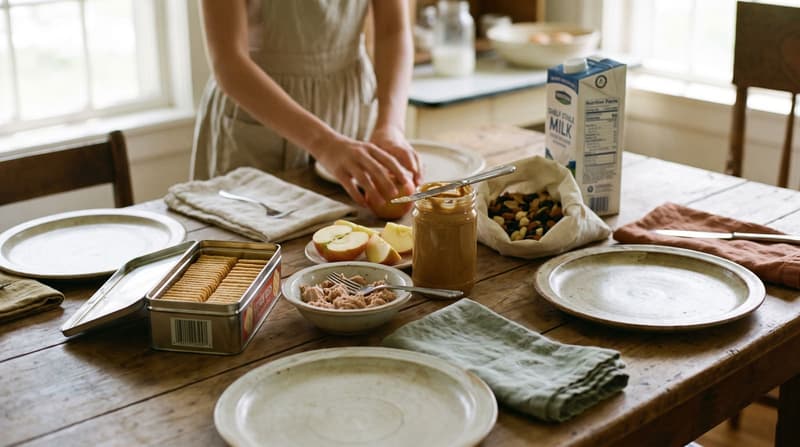
Do you need recipes? Not really. Most of these are “open, mix, eat.” Here are three that feel like a real dinner:
- Bean and corn salad. Drain one can of black beans and one can of corn. Mix with salsa. Scoop with chips.
- Chicken salad crackers. Mix a can of chicken with a mayo packet or a spoon of relish. Spread on crackers.
- Peanut butter roll-ups. Spread peanut butter on a tortilla. Add honey or raisins. Roll it up.
Once you open a can of meat, eat it in one sitting. With no fridge, there is no safe place to keep leftovers.
Your No-Cook Shopping List
What are the top survival foods to stock? These 10 cover most no-cook meals:
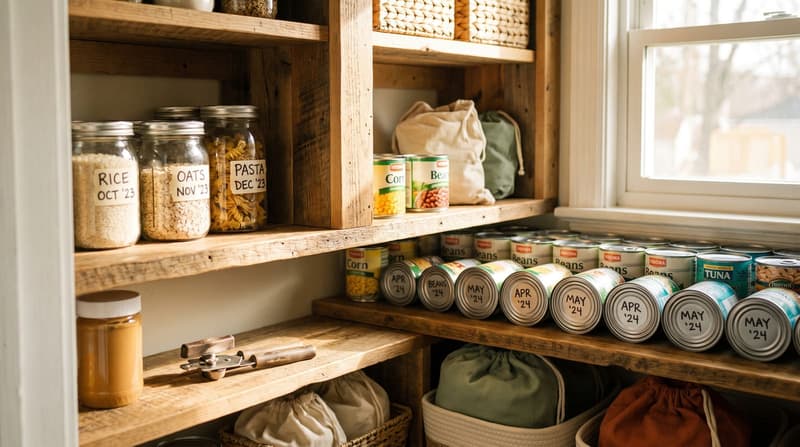
- Canned tuna, chicken or salmon (pull-tab lids help)
- Canned beans and chili
- Canned fruit and applesauce cups
- Canned vegetables like corn and green beans
- Peanut butter or another nut butter
- Crackers, tortillas and bread
- Dry cereal and granola
- Shelf-stable milk in small boxes
- Protein bars, nuts and trail mix
- Dried fruit and jerky
Add a manual can opener, paper plates, plastic forks and hand wipes. Ready.gov and the Red Cross both list a can opener as a must-have.
How much does this cost? A 3-day supply for one person might run about 25 to 40 dollars. That is a rough estimate. Prices depend on your store and what you pick. Our guide to build a 2-week emergency pantry on a budget shows how to spread the cost over a month.
Healthy no-cook picks
Can emergency food be healthy? Yes, with a little care. Pick fruit packed in juice, not heavy syrup. Choose low-salt canned vegetables and beans when you can. Salty food makes you thirsty, and you may be short on water. Nuts, beans and canned fish give you protein that keeps you full.
Plan for babies, special diets and pets
Does someone at home need special food? Stock theirs first. For babies, Ready.gov says to use ready-to-feed formula. If you must mix formula, use bottled or boiled water. If someone has diabetes, allergies or a medical diet, ask a doctor what to keep on hand. Pets need their own food and water too.
Food Safety Without a Fridge
Is it safe to eat canned food cold? Yes, if the can is in good shape. Ready.gov says to skip cans that are swollen, dented or rusted. Never taste food from a can that looks or smells wrong.
What is the 2 2 2 rule for food?
You may see the “2 2 2 rule” online. It is a rule of thumb for leftovers, and people explain it in different ways. It is not an official rule.
The part that matters comes from FoodSafety.gov. Do not leave perishable food, like opened meat, milk or leftovers, out for more than 2 hours. With no fridge, that means open only what you will eat right now.
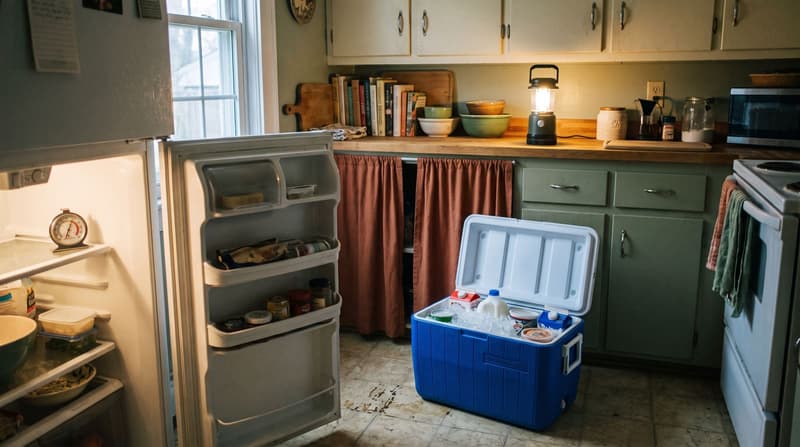
Eat the fridge food first
What should you eat first in an outage? Start with what is in the fridge. FoodSafety.gov says a closed fridge keeps food safe for about 4 hours. After that, perishable food that sat above 40°F for 2 hours or more should go. Then move to the freezer, and save your shelf food for last. Our power outage food safety guide covers what to keep and what to toss.
What If You Want Something Warm?
Can you heat food at all? Ready.gov says candle warmers, chafing dishes and fondue pots can work indoors. Charcoal grills and camp stoves are for outdoor use only. Never use them inside, even in a garage. They can fill the house with carbon monoxide, a gas you cannot see or smell.
If you run a generator, keep it outside and far from windows. Read our portable generator safety rules before the next storm.
Do Not Forget Water
Do no-cook meals need water? Not to make them, but your family still needs to drink. Ready.gov says to store at least one gallon per person per day. See how much water to store for an emergency for a table by household size.
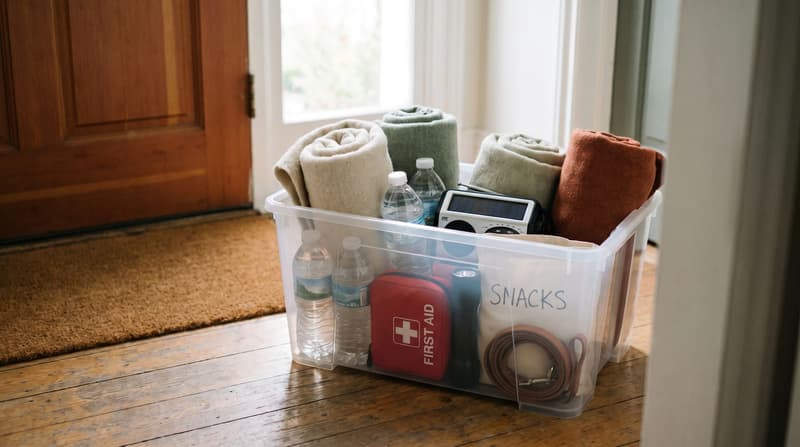
Keep your no-cook food with the rest of your supplies. Our 72-hour home emergency checklist covers light, first aid and papers. Packing to leave? The go-bag checklist has a short list of food that travels well.
Your Next Step
Pick one no-cook dinner from the plan above and serve it this week. Ask your family what they liked. Then buy enough of those foods for 3 days and put them on one shelf with a can opener.