Wondering how much water to store for an emergency? The short answer is one gallon per person, per day. That simple rule comes from FEMA Ready.gov, and it is the base for everything below.
Water matters more than almost anything else in your kit. You can go a long time without food. You can only go a few days without water. So let’s make this easy.
How Much Water to Store Per Person
So what does “one gallon per person per day” really cover? It covers drinking water plus a little for cooking and cleaning. It is a floor, not a ceiling.
FEMA Ready.gov says to keep at least a 3-day supply for each person. If you can, store a 2-week supply for your home. The Red Cross gives the same advice.
Some people need more than a gallon a day. Ready.gov lists these groups:
- Kids
- People who are nursing
- People who are sick
- Anyone in a very hot place
If your home fits one of these, add extra. There is no harm in storing more.
A quick water table
How does that look for your home? Here is the math using one gallon per person per day.
| People at home | 3 days | 2 weeks |
|---|---|---|
| 1 person | 3 gallons | 14 gallons |
| 2 people | 6 gallons | 28 gallons |
| 3 people | 9 gallons | 42 gallons |
| 4 people | 12 gallons | 56 gallons |
| 5 people | 15 gallons | 70 gallons |
Does 56 gallons sound like a lot? It is. But you do not need it all this week. Start with 3 days. Then build up a little each time you shop.
What About Pets?
Do pets count? Yes. Ready.gov says to store water for your pets too. The right amount depends on the size and type of animal. Ask your vet how much your pet drinks in a day, then store at least that much for each day you plan for.
The Best Containers for Stored Water
What should you keep your water in? You have two good choices.
Store-bought bottled water
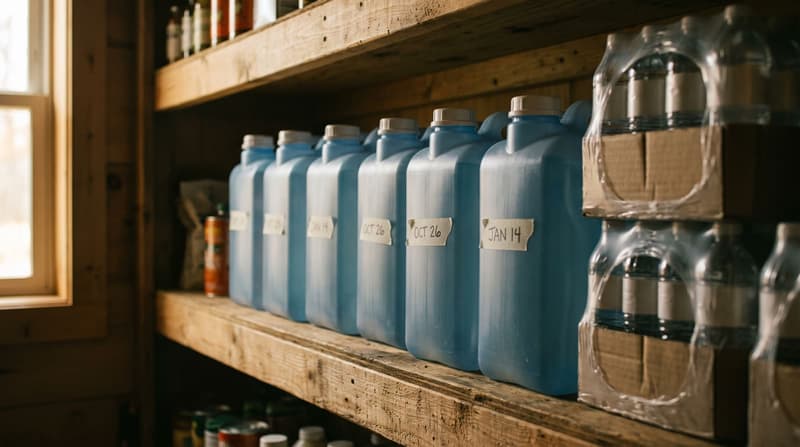
This is the easiest path. Ready.gov says to keep it sealed in the original bottle. Keep it until the date on the label. Stack cases in a cool, dark spot, off the floor if you can.
Water you bottle yourself
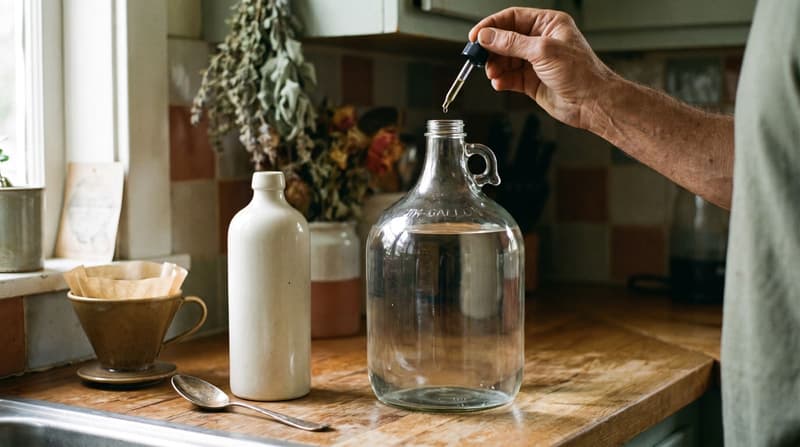
Bottling your own tap water is cheap. It just takes a bit more care. Ready.gov and the CDC share these tips:
- Use food-grade water containers. Look for ones made to hold drinking water.
- Clean them with soap and water, then rinse well.
- Fill them with clean tap water.
- Label each one with the date.
- Swap in fresh water every 6 months.
Can you reuse a soda bottle? Yes, if it is clean and had a tight cap. Should you reuse a milk jug? No. Ready.gov says milk and juice jugs are hard to clean, and they break down over time.
Where to Keep Your Water
Where is the best place to store it? Pick a spot that is cool, dark and dry. A closet, a pantry shelf or a spot under a bed all work.
Keep water away from gas, oil, paint and cleaners. Plastic can let fumes seep in over time. Also keep it out of direct sun, which can help germs grow and wear down the plastic.
Spread it out if you can. Keep some in the house and a few bottles in the car. That way, you are never without it.
Hidden Water Already in Your Home
What if the tap stops before you have stored enough? You may have more water than you think. Ready.gov points to a few safe sources:
- Water in your hot water tank
- Melted ice cubes from your freezer
- Liquid from canned fruits and vegetables
Some water is not safe to drink at all. Ready.gov says to skip water from toilet tanks, water beds, pools, spas and car radiators.
If you do not know if water is safe, clean it first. Our guide on how to purify water with bleach walks you through it with the CDC steps.
How Much Water to Store on a Tight Budget
Is it hard to buy two weeks of water at once? For most of us, yes. Here is a simple plan that spreads out the cost.
- Week 1: Fill clean bottles with tap water for 3 days. Cost is close to zero.
- Week 2: Buy one case of bottled water.
- Week 3: Buy one or two larger food-grade containers.
- Week 4: Fill them and label the date.
- Every 6 months: Swap your home-filled water.
A case of water often costs a few dollars. That is a rough estimate, and prices change by store and area. Even so, a little each week adds up fast.
Water is just one part of being ready. Pair it with food that needs little water to cook. Our guide to build a 2-week emergency pantry on a budget shows you how.
Keep Your Supply Fresh
How do you keep track of it all? Use a simple habit. Put a note on your calendar for the same two days each year. Many people pick the days the clocks change.
On those days, check each container. Look for leaks, cloudy water or cracks. Swap out any water you filled yourself. Drink it or use it on plants so it does not go to waste.
Your Next Step
Today, count the people and pets in your home. Multiply by 3 gallons. Then fill that many clean bottles tonight. Once you have 3 days set, add water to your 72-hour home emergency checklist and move on to the next item.