Learning how to storm proof your home comes down to one idea: give the wind nothing to grab. FEMA’s list for how to storm proof your home starts outside with loose items and trees, then moves to the roof, windows and doors.
Do you need to rebuild the house? No. Most of the work is cheap and fits into a weekend. A few big jobs, like shutters or roof straps, are worth saving for.
How to Storm Proof Your Home in 5 Steps
How do you make a house storm proof? Think of your house as a box. Strong wind tries to get inside the box through a window, door or garage door. Once it is in, it pushes up on the roof from below. FEMA’s tips all aim to keep that box closed and the roof tied down.
Here is the order that makes sense for most homes:
- Clear and tie down the yard.
- Protect windows and doors.
- Brace the garage door.
- Tie the roof to the walls.
- Pick a safe spot inside and stock it.
Step 1: Secure the Yard
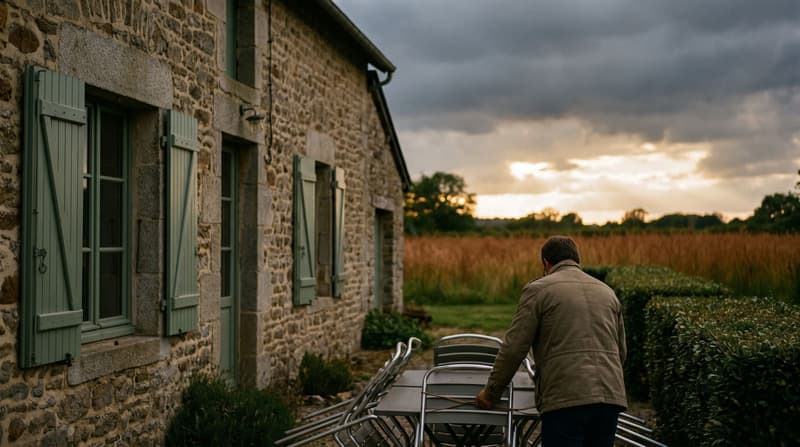
What turns a storm into a broken window? Usually something from your own yard. FEMA says loose items can become dangerous flying objects in hurricane winds.
- Plan where patio chairs, grills, toys and trash cans will go
- Trim trees and shrubs, and cut off dead limbs
- Tie down small young trees so they do not pull out
- Fasten loose gutters and downspouts
- Clear clogged gutters and drains
- Check that sheds, carports, porches and decks are firmly attached
Ready.gov’s hurricane page says the same thing in short form: clear drains and gutters, bring in outside furniture and think about hurricane shutters.
Big trees near the house? Hire a licensed tree service. Do not climb a ladder with a chainsaw.
Step 2: Cover Windows and Strengthen Doors
What protects glass best? FEMA says to buy storm shutters or make window covers. If you use plywood, FEMA says to pick outdoor or marine plywood at least 5/8 inch thick, cut to fit. Large glass, like a sliding door, needs thicker reinforced plywood.
Cut your covers now
Cut and label each board before storm season. Write “kitchen left” or “back slider” on it. On the day a storm is coming, stores sell out fast and you will not want to measure in the wind.
Add bolts to entry doors
FEMA suggests head and foot bolts on entry doors. These are bolts at the top and bottom of the door that slide into the frame. They help the door hold against a push of wind.
Caulk the gaps
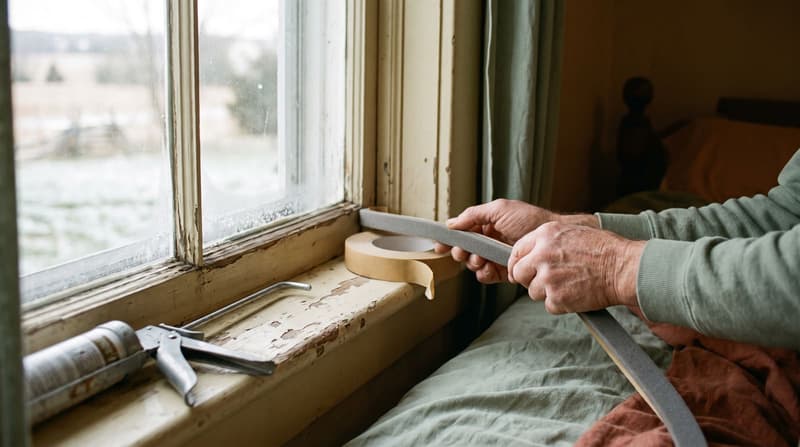
FEMA also says to caulk around doors and windows to keep wind-driven rain out. If you already sealed drafts when you winterize your home, you are halfway there.
Step 3: Brace the Garage Door
Why does the garage matter so much? It is often the biggest opening in the house. If it fails, wind rushes in and pushes on the roof.
Check whether your door has a wind rating on a sticker or in its paperwork. If not, ask a garage door company about a bracing kit or a wind-rated door. Treat this as a job for a pro.
Step 4: Tie the Roof to the Walls
FEMA says to use hurricane straps or clips to fasten the roof to the frame of the house. These are metal connectors that hold the roof rafters down to the walls.
Can you do this yourself? Sometimes, if your attic is open and easy to reach. Often it is done when the roof is replaced. Ask a licensed contractor and check local building rules first.
How Much Does It Cost to Hurricane Proof Your House?
Costs swing a lot by home size and region. These are rough estimates to help you plan, not quotes.
| Job | Rough cost | DIY or pro |
|---|---|---|
| Gutter straps, caulk, door bolts | $30 to $100 | DIY |
| Tree trimming | $200 to $1,000+ | Pro for big trees |
| Plywood window covers | $30 to $80 per window | DIY |
| Storm shutters | $1,000 to $10,000+ for a house | Pro |
| Garage door brace kit | $150 to $500 | DIY or pro |
| Roof straps or clips | $500 to $3,000+ | Pro |
| In-home safe room | $8,000 to $15,000+ | Pro |
If you are working out how to storm proof your home on a tight budget, start with the cheap rows. They fix the most common damage for the least money. FEMA also says the best protection against property damage is insurance, so review your policy and keep its value up to date.
Is There a Way to Tornado Proof Your House?
Not fully. A direct hit from a strong tornado can destroy a well-built home. What you can protect is the people inside.
FEMA says a safe room built to its criteria is a hardened structure that gives near-absolute protection from tornadoes and hurricanes. Ready.gov says to use a safe room or a storm shelter built to the ICC 500 standard. Some people build them underground, some inside a garage or closet.
No safe room? Ready.gov says the next best spot is a small, interior, windowless room or basement on the lowest floor of a sturdy building. Pick that room today and keep a few supplies in it. Ask your county or state emergency office about safe room grants, since FEMA funds some through them.
Can a House Withstand 50 MPH Winds?
Most sound houses can. The National Weather Service says isolated wind damage is possible when winds hold at 40 to 50 mph. It also notes that straight-line winds in strong thunderstorms can top 100 mph.
So what breaks at 50 mph? Usually the small stuff. A loose gutter peels off, a dead branch drops, a patio umbrella takes flight. That is why the yard comes first.
What About Storm Proofing a Home in Texas?
The steps are the same, but the threats change by region. Along the coast, focus on hurricanes: shutters, roof straps and flood insurance. In north Texas and the Plains, focus on tornadoes and hail: a safe room plan and a strong garage door. Check your local building code, because coastal areas often require more.
Get Ready for the Power to Go Out
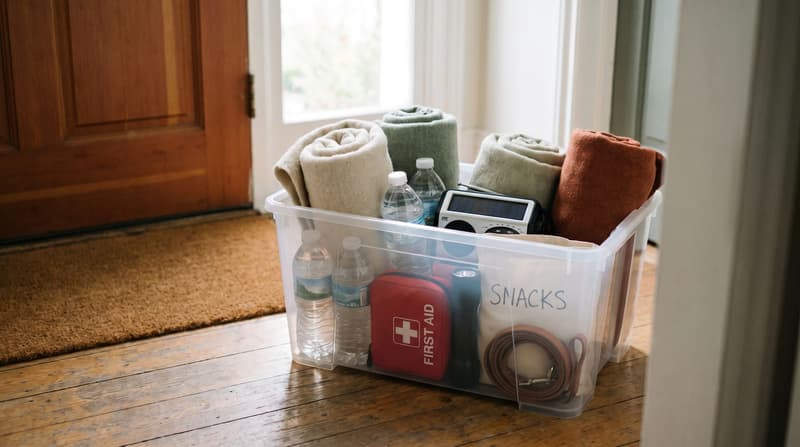
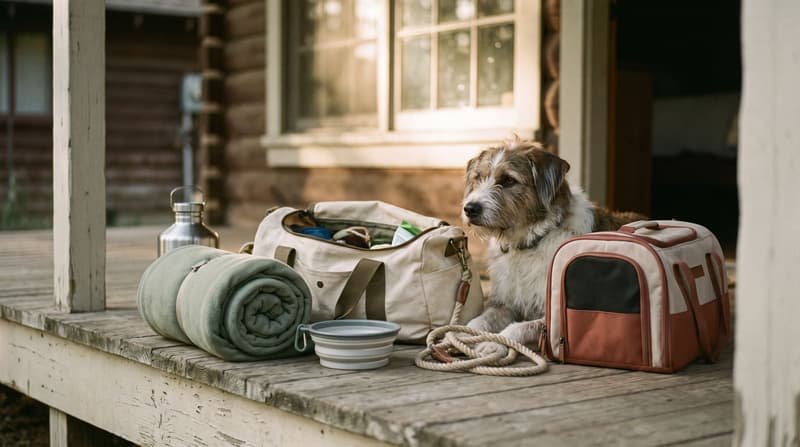
A storm proof house still loses power. Pack your 72-hour home emergency checklist supplies in your safe room or near it. Make sure you know how much water to store for an emergency.
Running a generator after the storm? Keep it outside and far from windows and doors. Our portable generator safety rules cover the details. Then talk through your family emergency plan so everyone knows where to go when the alert hits.
Your Next Step
This weekend, walk around your house with a notepad. Write down every loose item, dead branch and loose gutter, and fix the three worst ones before Sunday night.