You can winterize your home in one weekend with a few cheap supplies and a clear plan. To winterize your home means sealing out drafts, keeping pipes from freezing, making heat safe and getting ready for a storm that knocks out power. FEMA Ready.gov lists all four as the basics.
Do you need a contractor? For most of this, no. A caulk gun, some weather stripping and a free Saturday go a long way. Save the pros for the furnace and chimney.
What Does It Mean to Winterize Your Home?
It means getting your house ready before the first hard freeze. Ready.gov says to “keep out the cold with insulation, caulking and weather stripping,” learn how to keep pipes from freezing and test your alarms.
Why bother? Heat that leaks out is money you already paid for. The U.S. Department of Energy says about 30% of a home’s heating energy is lost through windows. A cold snap can also burst a pipe, and a burst pipe can soak a floor in minutes.
Here is how to split the work over two days.
Saturday: Seal the Drafts
Where does the cold get in? Mostly around windows, doors and anything that goes through a wall.
Find the leaks
On a windy day, hold a lit incense stick or a strip of tissue near window frames, door edges, outlets on outside walls and spots where pipes or wires come in. If the smoke or tissue moves, you found a leak. Mark it with painter’s tape.
Caulk what does not move
Caulk fills cracks between parts that stay still, like the gap between a window frame and the wall. Scrape out old, cracked caulk first. Run a thin, steady bead and smooth it with a wet finger.
Weather strip what does move
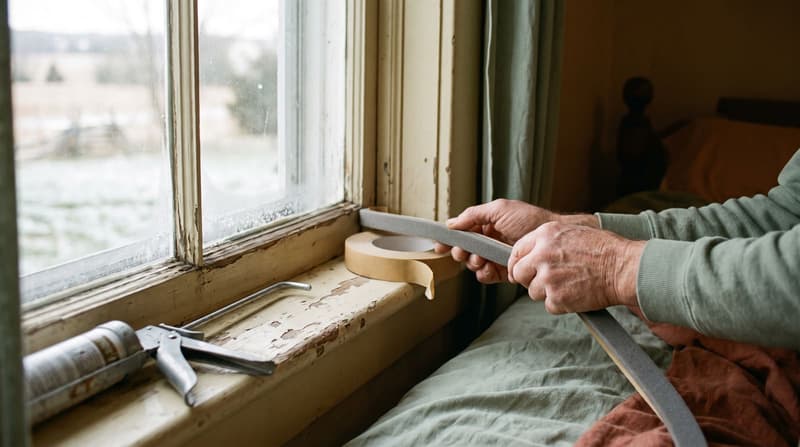
Weather stripping is a foam, rubber or felt strip that seals parts that open and close, like doors and window sashes. Clean the surface, peel the backing and press it down firmly. For the gap under a door, add a door sweep.
Cover the windows
Close heavy curtains at night. On sunny days, open the ones that face the sun to let free heat in. Clear plastic window film is a cheap fix for old, drafty glass.
Saturday Afternoon: Protect Your Pipes
What pipes are at risk? Ones in outside walls, crawl spaces, garages and under sinks on outside walls.
- Unhook garden hoses and drain them
- Shut off and drain outdoor faucets if they have an inside valve
- Wrap exposed pipes with foam pipe sleeves
- Find your main water shut-off valve and tag it
- Show everyone at home where it is
Why find the shut-off now? If a pipe bursts at 2 a.m., you will not want to search in the dark.
Sunday: Check Heat and Fire Safety
Is your heat safe to run all winter? The U.S. Fire Administration says to have heating equipment and chimneys cleaned and inspected each year by a professional. Book that visit now, before the fall rush.
Other rules from the Fire Administration:
- Keep anything that can burn at least 3 feet from any heat source.
- Turn space heaters off when you leave the room or go to bed.
- Never use an oven to heat your home.
Next, check your furnace filter. The Energy Dept. says to check it often, and swap or clean it as the maker says. A clogged filter makes the furnace work harder.
Test your alarms
Ready.gov says to install and test smoke alarms and carbon monoxide (CO) alarms with battery backups. CO is a gas you cannot see or smell, and it comes from anything that burns fuel. Press the test button on each alarm. Swap batteries if you are not sure when you last did. For anything wired into your house, hire a licensed electrician.
Sunday Afternoon: Get Ready for a Winter Outage
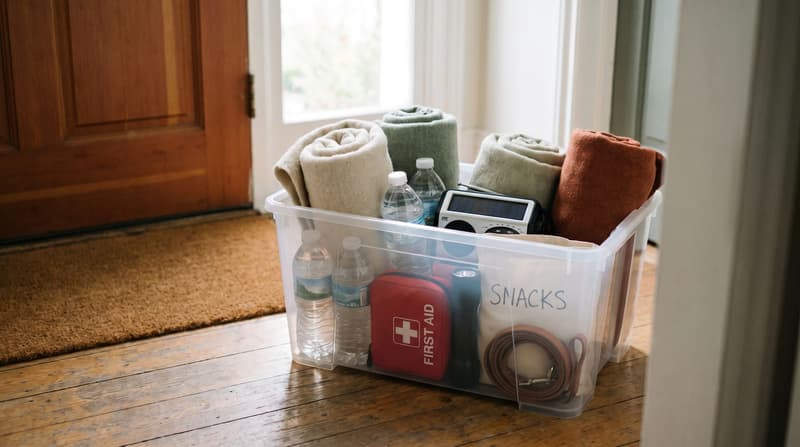
What if a storm takes out the power for days? Ready.gov says to gather supplies in case you need to stay home for several days without power.
- Water for each person for at least 3 days
- Food that needs no cooking
- Flashlights, extra batteries and a radio
- Warm blankets, hats and layers for each person
- A full tank of gas in the car
Our 72-hour home emergency checklist has the full list. For water, see how much water to store for an emergency.
Planning to run a generator? Keep it outside, at least 20 feet from windows, doors and attached garages, per Ready.gov. Read our portable generator safety rules first. If the fridge goes warm, our power outage food safety guide says what to keep and toss.
What Is the Coldest You Should Let Your House Get?
Can you turn the heat way down to save money? Some, yes. The Energy Dept. says you can set the thermostat 7 to 10 degrees lower for 8 hours a day while you sleep or are away. That can cut up to 10% a year off your heating bill.
Just do not let the house get so cold that pipes freeze. A common rule of thumb is no lower than about 55°F when you are gone. That is a rough number, so ask a local plumber what works for your home.
What Is the Cheapest Way to Heat Your House?
The cheapest heat is the heat you keep. Here are rough costs for the weekend jobs above. Prices vary by store and region, so treat these as estimates.
| Job | Rough cost | Time |
|---|---|---|
| Caulk and caulk gun | $10 to $20 | 1 to 2 hours |
| Weather stripping and door sweeps | $15 to $40 | 1 to 2 hours |
| Foam pipe sleeves | $10 to $25 | 1 hour |
| Window film kit | $15 to $30 | 1 hour |
| Furnace filter | $10 to $40 | 10 minutes |
| Pro furnace or chimney check | $100 to $250 | 1 visit |
After that, the Energy Dept. has a free tip: bundle up. Wear layers and use blankets so you can keep the thermostat a bit lower.
Need help paying? Ready.gov says to contact the Low Income Home Energy Assistance Program, or LIHEAP, for help with heating bills and weatherization.
How Do You Winterize a House in a Cold State Like Michigan?
The steps are the same, but start earlier and go further. In places with long, hard winters, add these:
- Do the work by mid-fall, before the first deep freeze.
- Add insulation to the attic if you can see the tops of the floor joists.
- Keep a snow shovel, ice melt and a scraper by the door.
- Put a winter kit in the car with a blanket, snacks and a phone charger.
Live where spring brings high winds too? Our guide on how to storm proof your home covers the yard, windows, garage door and roof.
Your Next Step
This Saturday, buy one tube of caulk and one roll of weather stripping. Then walk every window and outside door with a strip of tissue, mark the leaks with tape and seal the worst three before dinner.