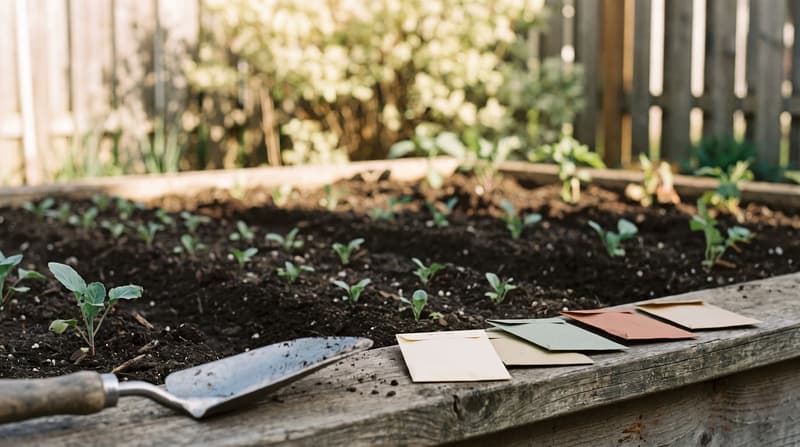
Want to know how to make a backyard garden? Pick the sunniest spot in your yard, build one raised bed, fill it with soil and compost, then plant five things your family already eats.
That is the whole job. A first garden does not need to be big. It needs sun, loose soil and water you can reach with a hose.
Why bother? Fresh food tastes better, it costs very little once the bed is built, and it is one less thing to buy. Let’s walk through it. No tiller, no fancy tools.
How to Make a Backyard Garden in 7 Steps
The short version first. Details below.
- Watch your yard for a day and find the sunny part.
- Look up your zone and your last frost date.
- Mark out one small bed. Start at 4 feet by 8 feet.
- Fill it with good soil and compost.
- Pick five easy crops.
- Plant, water and mulch.
- Write one line a week in a garden log.
1. Find your sun
Most garden crops want 6 to 8 hours of direct sun a day. How do you check? Step outside at 9 in the morning, at noon and at 3 in the afternoon on a clear day. Note where the sun hits each time.
The spot that is bright all three times is your garden. Shade from a big tree or the house will cut your harvest more than anything else on this list.
2. Check your zone and frost date
What grows in your yard depends on where you live. The USDA Plant Hardiness Zone Map lets you type in your ZIP code and see your zone. The map is built on the average coldest winter temperature, shown in 10 degree bands.
Your zone tells you what lives through the winter. Your last spring frost date tells you when it is safe to plant. Your county extension office can give you that date for your town.
3. Mark out one small bed
How big should you go? Smaller than you want to. A bed 4 feet wide and 8 feet long is plenty for a first year.
Why 4 feet wide? You can reach the middle from both sides without stepping on the soil. Packed soil is bad soil. You have three ways to build it:
| Bed type | Rough cost | Best for |
|---|---|---|
| In-ground row | Under 50 dollars | Decent soil, flat yard |
| Wood raised bed | 80 to 200 dollars | Poor soil, easy reach |
| Metal or kit bed | 120 to 300 dollars | Fast setup, long life |
Those are rough numbers. Lumber and soil prices swing a lot by area and season.
4. Fill it with good soil
Plants live or die on soil. A simple raised bed mix is about half topsoil, a third compost, and the rest something light like coarse sand or fine bark.
Going in the ground instead? Pull the grass, loosen the top 8 to 12 inches with a fork, then spread 2 to 3 inches of compost on top. You do not have to dig it all in.
One safety note. If your bed will sit near an old painted house, a busy road or an old shed, get the soil tested first. Your extension office can tell you how. If the test comes back high in lead, build a raised bed and fill it with clean soil.
5. Pick five easy crops
What should a beginner plant? Things that grow fast and forgive mistakes. Bush beans, leaf lettuce, summer squash, cherry tomatoes and radishes are all kind to new gardeners.
Skip corn, melons and pumpkins the first year. They eat space and give back very little in a small bed.
6. Plant, water and mulch
Follow the spacing on the seed packet. It looks like too much room. It is not.
After planting, water the bed well. Then spread 2 to 3 inches of straw, leaves or wood chips on the bare soil. Mulch holds water in, keeps weeds down and saves you hours of work.
7. Keep a garden log
Why write anything down? Because next spring you will not remember. Keep a card by the back door. One line a week: what you planted, what died, what you ate.
A Simple Backyard Garden Layout
What is a simple way to lay out a garden? Put tall plants on the north side so they do not shade the short ones. Then work down by height.
| Where in the bed | What goes there |
|---|---|
| North end | Tomatoes, beans on a trellis |
| Middle | Squash, peppers |
| South end | Lettuce, radishes, herbs |
| Edges | Marigolds and more herbs |
How can a beginner design a garden?
Draw the bed on a sheet of paper. Make one square per square foot. Write one crop in each square. That is the whole design.
Leave a path at least 2 feet wide around the bed so a wheelbarrow fits. Put the garden where you walk past it every day. A garden you cannot see is a garden you forget to water.
Make Your Own Compost for Free
Compost is the cheapest way to feed a bed. A home pile runs on two things, browns and greens. Browns are dry leaves and plain shredded paper. Greens are fruit and vegetable scraps and grass clippings.
How much of each? The EPA says to add at least two to three times as much brown as green by volume.
What stays out of the pile? Meat, fish, bones, cheese and dairy. The EPA leaves all of them off the list. They draw animals and do not break down well in a backyard pile.
How long does it take? A pile you turn and keep damp gives you finished compost in about three to five months, per the EPA. Ignore it, and the same pile can take a year.
How Much Water Does a Garden Need?
Plan on about 1 inch of water a week, rain included. That number comes from the EPA WaterSense program, which notes it shifts with your weather and your plants.
Want to measure it? Set a few empty cans around the bed while the sprinkler runs. The EPA suggests timing how long it takes to collect a half inch.
When should you water? Not at midday. The EPA warns that the hot sun evaporates much of it before thirsty plants get any. Early morning is the better habit.
A long dry spell is also a good nudge to check your own supply. Our guide on how much water to store for an emergency has a table by household size.
What Does It Cost to Start?
Most of what it costs to learn how to make a backyard garden gets spent once. The bed itself lasts for years.
| Item | Rough first-year cost |
|---|---|
| Lumber or kit for one bed | 80 to 200 dollars |
| Soil and compost to fill it | 60 to 150 dollars |
| Seeds and a few starter plants | 20 to 40 dollars |
| Trowel, gloves and watering can | 30 to 50 dollars |
| Mulch | 0 to 30 dollars |
Those are rough estimates. They move with lumber prices and with your area. Year two costs almost nothing, because you reuse the bed and add compost you made.
Want it cheaper? Start with an in-ground row and a few dollars of bean seeds.
Mistakes That Sink a First Garden
What usually goes wrong? Almost always one of these five:
- Too big, too soon. One bed you tend beats four you ignore.
- Not enough sun. Nothing fixes a shady spot.
- Planting too early. A late frost kills tomatoes overnight.
- No mulch. Bare soil dries out fast and grows weeds.
- Crowding. Two plants fighting yield less than one healthy one.
Safety matters too. Wear gloves and closed shoes, drink water on hot days, and keep your tetanus shot current. Ask your doctor if you are not sure when you had your last one.
From Garden to Pantry
A garden feeds you in summer. A stocked shelf feeds you the rest of the year. The two work together.
Extra beans and squash can be frozen or canned. If you freeze your harvest, learn the outage rules first. Our guide to power outage food safety covers what to keep and what to toss.
Garden food is the fresh half of a bigger plan. The shelf-stable half is here: build a 2-week emergency pantry on a budget.
Your Next Step
Go stand in your yard at noon today. Find the brightest patch and drive in four stakes, 4 feet by 8 feet. That patch is your garden. Everything else is just filling it in.